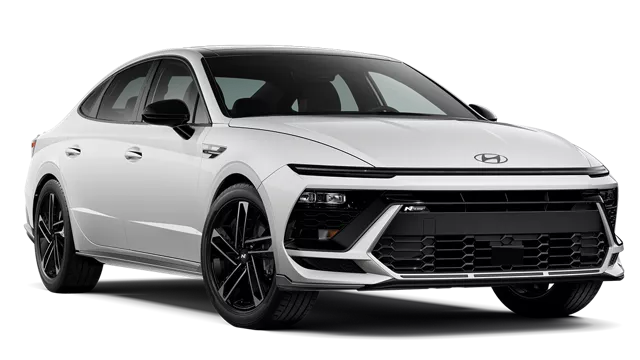
IONIQ 6 N coming 2026 with extremely limited availability at select dealers. Contact your Hyundai dealer for details. Non-U.S. preproduction model shown. U.S. production model may vary.
IONIQ 6 N coming 2026 with extremely limited availability at select dealers. Contact your Hyundai dealer for details. Non-U.S. preproduction model shown. U.S. production model may vary.
No suggested searches for "{{ search }}". Try revising your entry.
{{ arrowActive.start }}-{{ arrowActive.end }} of {{ arrowActive.total }} saves
Saved on {{ vehicle.savedDate | toDate }}
{{ vehicle.modelYear }}
{{ vehicle.modelName }}
{{ vehicle.trimName }}
Total MSRP
MSRP excludes freight charges, tax, title, and license fees. Freight charges and actual dealer prices may vary. Vehicles displayed may contain optional equipment at additional cost. Accessory items shown may vary according to model and illustration.
Please remove one of your comparisons in order to add this one.
Saved on {{ vehicle.savedDate | toDate }}
{{ vehicle.modelYear }}
{{ vehicle.modelName }}
{{ vehicle.trimName }}
Total MSRP
MSRP excludes freight charges, tax, title, and license fees. Freight charges and actual dealer prices may vary. Vehicles displayed may contain optional equipment at additional cost. Accessory items shown may vary according to model and illustration.
{{ vehicle.price | toCurrency }}
{{ vehicle.exterior.name.toLowerCase() }}
{{ vehicle.interior.name.toLowerCase() }}
{{ vehicle.package }}
VIN: {{ vehicle.vin }}
{{ vehicle.dealer }} {{ vehicle.distance | roundMiles }} mi
Are you sure you want to remove this vehicle?This vehicle is no longer available.
Maximum reached
Please remove one of your comparisons in order to add this one.
Saved on {{ vehicle.savedDate | toDate }}
{{ vehicle.modelYear }}
{{ vehicle.modelName }}
{{ vehicle.trimName }}
Price
MSRP excludes freight charges, tax, title, and license fees. Freight charges and actual dealer prices may vary. Vehicles displayed may contain optional equipment at additional cost. Accessory items shown may vary according to model and illustration.
{{ arrowActive.start }}-{{ arrowActive.end }} of {{ arrowActive.total }} saves
Saved on {{ vehicle.savedDate | toDate }}
{{ vehicle.modelYear }}
{{ vehicle.modelName }}
{{ vehicle.trimName }}
Total MSRP
MSRP excludes freight charges, tax, title, and license fees. Freight charges and actual dealer prices may vary. Vehicles displayed may contain optional equipment at additional cost. Accessory items shown may vary according to model and illustration.
Please remove one of your comparisons in order to add this one.
Saved on {{ vehicle.savedDate | toDate }}
{{ vehicle.modelYear }}
{{ vehicle.modelName }}
{{ vehicle.trimName }}
Total MSRP
MSRP excludes freight charges, tax, title, and license fees. Freight charges and actual dealer prices may vary. Vehicles displayed may contain optional equipment at additional cost. Accessory items shown may vary according to model and illustration.
{{ vehicle.price | toCurrency }}
{{ vehicle.exterior.name.toLowerCase() }}
{{ vehicle.interior.name.toLowerCase() }}
{{ vehicle.package }}
VIN: {{ vehicle.vin }}
{{ vehicle.dealer }} {{ vehicle.distance | roundMiles }} mi
Are you sure you want to remove this vehicle?This vehicle is no longer available.
Maximum reached
Please remove one of your comparisons in order to add this one.
Saved on {{ vehicle.savedDate | toDate }}
{{ vehicle.modelYear }}
{{ vehicle.modelName }}
{{ vehicle.trimName }}
Price
MSRP excludes freight charges, tax, title, and license fees. Freight charges and actual dealer prices may vary. Vehicles displayed may contain optional equipment at additional cost. Accessory items shown may vary according to model and illustration.
A whole new car buying experience designed to save you time and help make buying your new car as enjoyable as driving it.
Transparent Pricing
Get online pricing up front so you can shop and compare with confidence.
Flexible Test Drive
Schedule a test drive in advance at your convenience. Or skip the dealership and we’ll gladly bring your test drive to you.
Streamlined Purchase
On participating dealership websites, you can purchase your new Hyundai quickly and easily. It’s a process called Hyundai Click to Buy. From credit applications, loan approvals and payment calculations to financing and trade-in options and home delivery, it’s all done simply at your convenience.
3 Day Worry-Free Exchange
We're sure you'll love your new Hyundai. If for any reason you don't, return it within 3 days and exchange it for another new Hyundai.
Get in. Get out. Get back to your life. Enjoy fast oil changes and more to help maintain your Hyundai. Car Care Express is your best solution for quality and convenience for the following maintenance:
Evolve+ is our month-to-month car subscription service that comes with 1,000 miles, insurance, maintenance, registration, and roadside assistance. And you can cancel at any time.
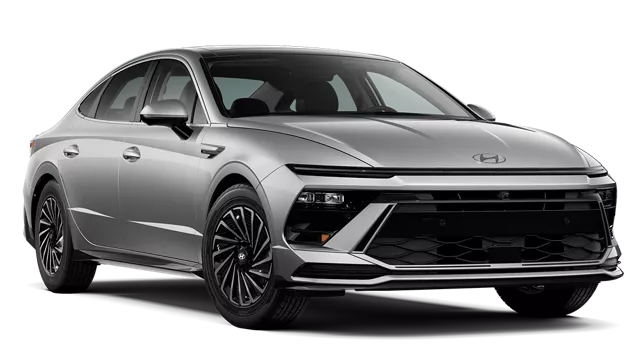
Our modern, sporty sedan available in gas and hybrid.
SONATA
Our modern, sporty sedan available in gas and hybrid.
SONATA
Our modern, sporty sedan available in gas and hybrid.
SONATA
Our modern, sporty sedan available in gas and hybrid.
SONATA
Our modern, sporty sedan available in gas and hybrid.
SONATA
Our modern, sporty sedan available in gas and hybrid.
SONATA
Our modern, sporty sedan available in gas and hybrid.
SONATA
Our modern, sporty sedan available in gas and hybrid.
SONATA
Our modern, sporty sedan available in gas and hybrid.
Starting MSRPEst. Net Price
$27,450
MSRP excludes freight charges, tax, title, and license fees. Freight charges and actual dealer prices may vary. Vehicles displayed may contain optional equipment at additional cost. Accessory items shown may vary according to model and illustration.
Up to38 MPG Hwy
2026 SONATA SE: 28 City/38 Hwy/32 Combined MPG. 2026 SONATA SEL SPORT: 25 City/36 Hwy/29 Combined MPG. 2026 SONATA SEL SPORT AWD: 24 City/33 Hwy/27 Combined MPG. 2026 SONATA N Line: 23 City/32 Hwy/27 Combined MPG. All figures are EPA estimates and for comparison purposes only. Actual mileage may vary with options, driving conditions, driving habits and vehicle's condition.
Up to290 hp
290 horsepower available on N Line trim.
Available19 -inch wheels
2026
SONATA
Our modern, sporty sedan available in gas and hybrid.
SONATA
Our modern, sporty sedan available in gas and hybrid.
SONATA
Our modern, sporty sedan available in gas and hybrid.
SONATA
Our modern, sporty sedan available in gas and hybrid.
SONATA
Our modern, sporty sedan available in gas and hybrid.
SONATA
Our modern, sporty sedan available in gas and hybrid.
SONATA
Our modern, sporty sedan available in gas and hybrid.
SONATA
Our modern, sporty sedan available in gas and hybrid.
SONATA
Our modern, sporty sedan available in gas and hybrid.
Starting MSRPEst. Net Price
$29,200
MSRP excludes freight charges, tax, title, and license fees. Freight charges and actual dealer prices may vary. Vehicles displayed may contain optional equipment at additional cost. Accessory items shown may vary according to model and illustration.
Up to56 MPG Hwy
2026 SONATA SE: 28 City/38 Hwy/32 Combined MPG. 2026 SONATA SEL SPORT: 25 City/36 Hwy/29 Combined MPG. 2026 SONATA SEL SPORT AWD: 24 City/33 Hwy/27 Combined MPG. 2026 SONATA N Line: 23 City/32 Hwy/27 Combined MPG. 2026 SONATA Blue Hybrid: 47 City/56 Hwy/51 Combined MPG. 2026 SONATA SEL Hybrid: 44 City/51 Hwy/47 Combined MPG. 2026 SONATA Limited Hybrid: 44 City/51 Hwy/47 Combined MPG. All figures are EPA estimates and for comparison purposes only. Actual mileage may vary with options, driving conditions, driving habits and vehicle's condition.
Looking for exceptional offers? Then you’ve come to the right place! Because here is where you’ll find all of our best deals—including our latest car lease deals and SUV lease deals—that can get you into the Hyundai you’ve been wanting for less.
Looking for exceptional offers? Then you’ve come to the right place! Because here is where you’ll find all of our best deals—including our latest car lease deals and SUV lease deals—that can get you into the Hyundai you’ve been wanting for less.
Looking for exceptional offers? Then you’ve come to the right place! Because here is where you’ll find all of our best deals—including our latest car lease deals and SUV lease deals—that can get you into the Hyundai you’ve been wanting for less.
Looking for exceptional offers? Then you’ve come to the right place! Because here is where you’ll find all of our best deals—including our latest car lease deals and SUV lease deals—that can get you into the Hyundai you’ve been wanting for less.
Showing {{carouselNavPage}} of {{totalSlides}}
There are no offers for the {{modelName}} {{selectedTrimNameByo || ''}} available in your area at this time.
Offer ends in {{expirationDateCountdown(selectedDetailsOffer?.endDate)}} {{expirationDateCountdownText(selectedDetailsOffer?.endDate)}} on {{formatDate(selectedDetailsOffer?.endDate)}}
Or connect with a local dealerGet this offer applied on a {{vehicle?.modelYear}} {{vehicle?.modelName}} {{selectedTrimNameByo}} price quote.
{{ buildSalableMessage }}
{{ modelYear }} {{ modelName }}
An industry-leading warranty for up to 10 years of worry-free driving.
With America's Best Warranty—including a 10-Year/100,000-Mile Powertrain Limited Warranty—standard on every Hyundai, 2026 SONATA gives you peace of mind for years to come.
America's Best Warranty claim based on total package of warranty programs. See dealer for LIMITED WARRANTY details. See your Hyundai dealer and HyundaiUSA.com/Assurance for details and limitations regarding Hyundai’s Powertrain Limited Warranty, New Vehicle Limited Warranty and Roadside Assistance program. Competitive claim based on comparison of warranty specifications on manufacturer websites.
An industry-leading warranty for up to 10 years of worry-free driving.
With America's Best Warranty—including a 10-Year/100,000-Mile Powertrain Limited Warranty—standard on every Hyundai, 2026 SONATA Hybrid gives you peace of mind for years to come.
America's Best Warranty claim based on total package of warranty programs. See dealer for LIMITED WARRANTY details. See your Hyundai dealer and HyundaiUSA.com/Assurance for details and limitations regarding Hyundai’s Powertrain Limited Warranty, New Vehicle Limited Warranty and Roadside Assistance program. Competitive claim based on comparison of warranty specifications on manufacturer websites.
A capable and stylish
reminder of why you
love sedans.
A capable and stylish
reminder of why you
love sedans.
A capable and stylish
reminder of why you
love sedans.
A capable and stylish
reminder of why you
love sedans.
From its unmistakable style to the latest safety advancements, SONATA is the midsize sedan that has it all—and then some. Like available HTRAC All Wheel Drive, plenty of cutting-edge tech, even an available 290-hp turbo engine. Which means it’ll turn corners as quickly as it turns heads.
2026 SONATA SEL Sport AWD: 24 City/33 Hwy/27 Combined MPG. All figures are EPA estimates and for comparison purposes only. Actual mileage may vary with options, driving conditions, driving habits and vehicle's condition.
Video depicts 2024 models. Current model year vehicles may vary.
Your complete guided tour of SONATA’s hybrid and sporty trims.
Whatever you’re looking for, SONATA’s got it.
Limited Hybrid shown
All Wheel Drive
Sport performance
Premium hybrid
SONATA SEL Sport offers available HTRAC All Wheel Drive along with plenty of must-have features, like 18-inch alloy wheels, paddle shifters, a leather-wrapped steering wheel and wireless charging.
SONATA Hybrid Limited treats you with high-end features like leather seating surfaces, Remote Smart Parking Assist and Bose® Premium Audio with 12 speakers.
Standard on Limited trim.
Remote Smart Parking Assist (RSPA) can remotely help park the vehicle. However, several factors can impact RSPA performance. RSPA may not function correctly if one or more of the parking sensors is damaged, dirty or covered or if weather conditions (heavy rain, snow or fog) interfere with sensor operation. Always inspect the parking area with your own eyes. See Owner's Manual for further details and limitations.
Bose is a registered trademark of Bose Corporation.
SONATA SEL Sport offers available HTRAC All Wheel Drive along with plenty of must-have features, like 18-inch alloy wheels, paddle shifters, a leather-wrapped steering wheel and wireless charging.
SONATA Hybrid Limited treats you with high-end features like leather seating surfaces, Remote Smart Parking Assist and Bose® Premium Audio with 12 speakers.
Standard on Limited trim.
Remote Smart Parking Assist (RSPA) can remotely help park the vehicle. However, several factors can impact RSPA performance. RSPA may not function correctly if one or more of the parking sensors is damaged, dirty or covered or if weather conditions (heavy rain, snow or fog) interfere with sensor operation. Always inspect the parking area with your own eyes. See Owner's Manual for further details and limitations.
Bose is a registered trademark of Bose Corporation.
SONATA Hybrid is proof that you really can have it all. Of course there’s great MPG—up to an EPA-estimated 56 MPG Highway. But there’s also so much more. Like head-turning looks, tons of tech to help keep you connected and protected, even a healthy dose of fun thanks to e-Dynamic Drive. It all adds up to one extraordinary hybrid.
2026 SONATA Blue Hybrid: 47 City/56 Hwy/51 Combined MPG. 2026 SONATA SEL Hybrid: 44 City/51 Hwy/47 Combined MPG. 2026 SONATA Limited Hybrid: 44 City/51 Hwy/47 Combined MPG. All figures are EPA estimates and for comparison purposes only. Actual mileage may vary with options, driving conditions, driving habits and vehicle's condition.
Hyundai SmartSense
Forward Collision-Avoidance Assist with Pedestrian, Cyclist, and Junction Turning Detection (FCA-JT)
Standard on all trims. When the system detects a vehicle or pedestrian ahead, it warns you of a potential collision. If you don’t begin stopping in time, the system may automatically apply braking. In addition, the FCA system can also apply brakes when turning left at an intersection when risk of a collision with an oncoming vehicle is detected.
Standard on all trims.
Forward Collision-Avoidance Assist with Pedestrian, Cyclist, and Junction Turning Detection (FCA-JT) is intended to be a supplement to safe driving practices. The system is not designed to detect certain stationary objects such as trees or poles, and may not detect all vehicles, pedestrians, or cyclists under certain conditions. The system’s Junction Turning function operates when the vehicle’s left turn signal is activated, the vehicle is travelling between approximately 6-19 mph and the oncoming vehicle’s speed is between approximately 19-44 mph. The system is a driver assistance system and is not a substitute for safe driving. The driver is responsible for being attentive and maintaining control of the vehicle, and should not wait for the system's alerts before braking as there may not be sufficient time to brake safely. See Owner’s Manual for further details and limitations.
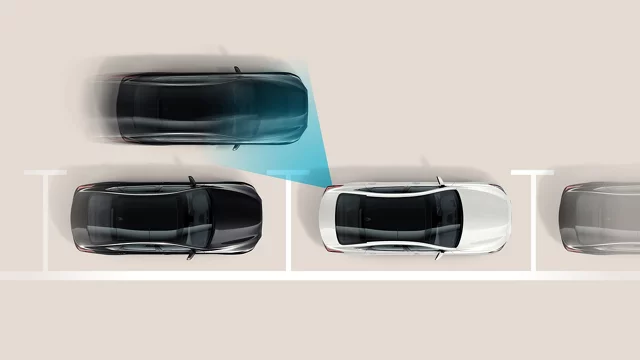
Safe Exit Warning (SEW)
Standard on all trims. This pioneering innovation warns the driver when the vehicle is parked and its radar detects a vehicle approaching from behind.
Standard on all trims.
When the vehicle is parked, Safe Exit Warning (SEW) can alert the driver when a vehicle is approaching from behind. SEW does not work in all situations and is not a substitute for driver or passenger attentiveness. Always be aware of your surroundings and attentive of approaching vehicles. See Owner's Manual for further details and limitations.
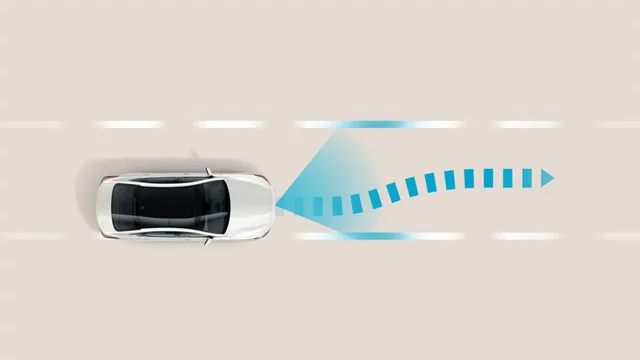
Lane Following Assist (LFA)
Standard on all trims. Using the front-view camera to detect lane markers on the road, this feature assists the driver's steering to help keep the vehicle centered inside the lane.
Standard on all trims.
Lane Following Assist (LFA) helps keep the vehicle centered in its lane only when the lane markings are clearly visible on the road. Lane Following Assist will not work under all circumstances and will not prevent loss of control. Lane Following Assist is a supplemental assist, and does not replace the need for extreme care and attention by the driver. See Owner’s Manual for further details and limitations.
Rear Occupant Alert (ROA)
Standard on all trims. After the engine is turned off, this feature, available on select vehicles, uses a visual warning in the instrument cluster to remind you to check the rear seats before exiting.
Standard on all trims.
Upon turning the engine off, Rear Occupant Alert (ROA) will provide a visual alert on the instrument cluster. ROA is not a substitute for driver attentiveness. Never leave a child or pet unattended in a vehicle. See Owner's Manual for further details and limitations.
Highway Driving Assist (HDA)
Standard on N Line and Limited Hybrid. This feature, available on select vehicles, helps maintain a set distance and speed from the vehicle ahead when driving on a highway and helps center the vehicle in the lane, even through a curve.
Standard on N Line and Limited trims.
Highway Driving Assist (HDA), is for highway use only and can help keep the vehicle centered in its lane while maintaining a safe distance from the vehicle ahead only when the lane markings are clearly visible on the road and should not be used in poor weather, heavy or varying traffic, or on winding or slippery roads. HDA will not work under all circumstances and will not prevent loss of control. Driver remains responsible to slow or stop the vehicle to avoid a collision. See Owner’s Manual for further details and limitations.
Standard on all trims. When you’re going in reverse, it lets you know with audio and visual cues if its sensors detect a vehicle approaching from the left or right. It may even apply the brakes automatically if needed.
Standard on all trims.
Rear Cross-Traffic Collision-Avoidance Assist (RCCA) can alert the driver of a potential collision by providing an audible warning and/or applying braking. RCCA is active when the vehicle is in reverse and operating at low speeds. Never rely exclusively on RCCA. RCCA cannot prevent all collisions and may not provide alerts or braking in all conditions. Always look over your shoulder and use your mirrors to confirm rear clearance. There are limitations to the function, detection, range and clarity of the system. See Owner's Manual for further details and limitations.
High Beam Assist (HBA)
Standard on all trims. Constantly turning your high beams off and on can be a hassle, which is why this thoughtful feature automatically does it for you. It can detect oncoming vehicles and toggle between high and low beams accordingly.
Driver Attention Warning (DAW)
Standard on all trims. To help prevent potential accidents, this system monitors your driving patterns to detect drowsy or inattentive driving. Once detected, it alerts you with a sound cue coupled with a warning message on the instrument cluster.
Standard on all trims.
Driver Attention Warning (DAW) is only a warning to inform the driver of a potential lack of driver attention or drowsiness. It does not detect and provide an alert in every situation. It is the driver's responsibility to remain alert at all times. See Owner’s Manual for further details and limitations.
Lane Keeping Assist (LKA)
Standard on all trims. This feature warns you through audio and visual cues if it detects your vehicle drifting out of its driving lane without signaling. If necessary, it may gently apply corrective steering assistance to keep you inside the lane.
Standard on all trims.
Lane Keeping Assist (LKA) will not work under all circumstances. It operates above 40 mph and only when it is able to detect painted lane markings. It cannot function if the lane markings cannot be seen clearly. If the lines cannot be seen clearly due to poor road conditions, weather, or lighting conditions, it may not function. It also may not function on very rough roads, when walls, curbs or concrete barriers are close by, or if following another car too closely. Since it "sees" the lane markings using a camera in the upper windshield area, it is imperative this area be clear and free of blockage such as stickers, dirt, snow, tinting material, markings and labels. Lane Keeping Assist is not a substitute for safe driving practices, but is a supplemental assist only. The driver is responsible for always maintaining command and control of the vehicle and must keep hands on the wheel at all times. See Owner's Manual for further details and limitations.
Smart Cruise Control (SCC) with Stop & Go
Standard on all trims. While traveling at a speed set by you, this feature uses radars to help maintain a safe distance from the car ahead. After the system slows the vehicle to a stop, it will reactivate if the vehicle in front moves within 3 seconds.
Standard on all trims.
Smart Cruise Control (SCC) is not a collision avoidance or warning device. SCC is for highway use only and should not be used in poor weather, heavy or varying traffic, or on winding or slippery roads. Driver remains responsible to slow or stop the vehicle to avoid a collision. See Owner's Manual for further details and limitations.
Blind-Spot Collision Warning (BCW)
Standard on all trims. When your Hyundai detects a vehicle in your blind spot area, you will receive a visual alert. If you try to change lanes in this situation, and audio and haptic feedback warning will occur.
Standard on all trims.
Blind-Spot Collision Warning (BCW) assists the driver by warning of other cars in the blind spot region. It senses the rear side territory of the vehicle when it is traveling over 20 mph. There are limitations to the function, range, detection and clarity of the system. It will not detect all vehicles or objects in the blind spot. Its operation depends on the size, distance, angle and relative speed difference between your car and other cars. BCW may not operate if sensors are obscured in any way. Do not rely exclusively on BCW. BCW is a supplemental system and the driver must still be attentive and exercise caution when driving. It is the driver's responsibility to be aware of the surroundings and ensure it is clear before changing lanes or directions. See Owner’s Manual for further details and limitations.
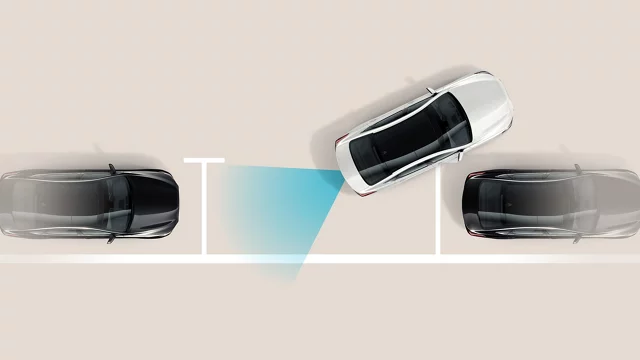
Remote Smart Parking Assist (RSPA)
Standard on Limited Hybrid. This feature, available on select vehicles, enables your Hyundai to park itself, even when you're not inside. It can back into and pull out of a parking space with a push of your Smart Key button.
Standard on Limited trim.
Remote Smart Parking Assist (RSPA) can remotely help park the vehicle. However, several factors can impact RSPA performance. RSPA may not function correctly if one or more of the parking sensors is damaged, dirty or covered or if weather conditions (heavy rain, snow or fog) interfere with sensor operation. Always inspect the parking area with your own eyes. See Owner's Manual for further details and limitations.
Blind-Spot View Monitor (BVM)
Standard on Limited Hybrid. With this available feature, a live camera feed of the lane will appear on the digital instrument gauge display when you signal to change lanes.
Standard on Limited trim.
Blind-Spot View Monitor (BVM) assists driver in changing lanes by providing a live view of the blind spots on either side of the vehicle and an audible alert if another vehicle is detected. Turn signal must be activated and other system limitations apply. Do not rely exclusively on BVM. It is the driver's responsibility to be aware of the surroundings and ensure it is clear before changing lanes or directions. See Owner's Manual for further details and limitations.
Surround View Monitor (SVM)
Standard on Limited Hybrid. This feature combines camera feeds to give you a 360-degree bird's-eye view around your vehicle.
Standard on Limited trim.
Surround View Monitor (SVM) is a parking support system. SVM cannot completely eliminate blind spots, may not detect every object and does not warn of moving objects. Always check surroundings before moving vehicle. See Owner's Manual for further details and limitations.
Standard on Limited Hybrid. When you're reversing out of a parking spot, you'll get an audio warning when sensors detect a potential collision with objects directly behind the vehicle. It may even lightly apply brakes if necessary.
Standard on Limited trim.
Parking Collision-Avoidance Assist – Reverse (PCA-R) can alert the driver of a potential hazard while reversing by providing an audible warning and/or applying braking. PCA-R is active when the vehicle is in reverse and operating at low speeds. Never rely exclusively on PCA-R. PCA-R cannot prevent all collisions and may not provide alerts or braking in all conditions. Always look over your shoulder and use your mirrors to confirm rear clearance. See Owner's Manual for feature details and limitations.
Standard on Limited Hybrid. Using ultrasonic sensors, it can detect and alert you with visual and audible warnings to help avoid a collision with pedestrians and objects around the vehicle while stopping or low-speed driving.
Standard on Limited trim.
Do not rely exclusively on Parking Distance Warning. Parking Distance Warning is a supplemental system and the driver must still be attentive and exercise caution when parking. See Owner's Manual for further details and limitations.
Video depicts 2024 models. Current model year vehicles may vary.
Your complete guided tour of SONATA’s hybrid and sporty trims.
Whatever you’re looking for, SONATA’s got it.
Premium hybrid
Sport performance
All Wheel Drive
SONATA Limited Hybrid treats you with high-end features like leather seating surfaces, Remote Smart Parking Assist and Bose® premium audio with 12 speakers.
Standard on Limited trim.
Remote Smart Parking Assist (RSPA) can remotely help park the vehicle. However, several factors can impact RSPA performance. RSPA may not function correctly if one or more of the parking sensors is damaged, dirty or covered or if weather conditions (heavy rain, snow or fog) interfere with sensor operation. Always inspect the parking area with your own eyes. See Owner's Manual for further details and limitations.
Bose is a registered trademark of Bose Corporation.
SONATA SEL Sport offers available HTRAC All Wheel Drive along with plenty of must-have features, like 18-inch alloy wheels, paddle shifters, a leather-wrapped steering wheel and wireless charging.
SONATA Limited Hybrid treats you with high-end features like leather seating surfaces, Remote Smart Parking Assist and Bose® premium audio with 12 speakers.
Standard on Limited trim.
Remote Smart Parking Assist (RSPA) can remotely help park the vehicle. However, several factors can impact RSPA performance. RSPA may not function correctly if one or more of the parking sensors is damaged, dirty or covered or if weather conditions (heavy rain, snow or fog) interfere with sensor operation. Always inspect the parking area with your own eyes. See Owner's Manual for further details and limitations.
Bose is a registered trademark of Bose Corporation.
SONATA SEL Sport offers available HTRAC All Wheel Drive along with plenty of must-have features, like 18-inch alloy wheels, paddle shifters, a leather-wrapped steering wheel and wireless charging.
The Trim Carousel can be navigated by using the left and right arrow keys or by clicking on the left and right arrow buttons.
{{ trim }}
The base trim with lots of great standard features.
{{ price }}
MSRP excludes freight charges, tax, title, and license fees. Freight charges and actual dealer prices may vary. Vehicles displayed may contain optional equipment at additional cost. Accessory items shown may vary according to model and illustration.
Starting MSRP
Key specifications
28 City/38 Hwy/32 Combined MPG
2026 SONATA SE: 28 City/38 Hwy/32 Combined MPG. All figures are EPA estimates and for comparison purposes only. Actual mileage may vary with options, driving conditions, driving habits and vehicle's condition.
MSRP excludes freight charges, tax, title, and license fees. Freight charges and actual dealer prices may vary. Vehicles displayed may contain optional equipment at additional cost. Accessory items shown may vary according to model and illustration.
Starting MSRP
Key specifications
47 City / 56 Hwy / 51 Combined MPG
2026 SONATA Blue Hybrid: 47 City/56 Hwy/51 Combined MPG. All figures are EPA estimates and for comparison purposes only. Actual mileage may vary with options, driving conditions, driving habits and vehicle's condition.
The balanced trim with plenty of must-have features.
{{ price }}
MSRP excludes freight charges, tax, title, and license fees. Freight charges and actual dealer prices may vary. Vehicles displayed may contain optional equipment at additional cost. Accessory items shown may vary according to model and illustration.
Starting MSRP
Key specifications
FWD: 25 City/36 Hwy/29 Combined MPG
2026 SONATA SEL Sport FWD: 25 City/36 Hwy/29 Combined MPG. All figures are EPA estimates and for comparison purposes only. Actual mileage may vary with options, driving conditions, driving habits and vehicle's condition.
AWD: 24 City/33 Hwy/27 Combined MPG
2026 SONATA SEL Sport AWD: 24 City/33 Hwy/27 Combined MPG. All figures are EPA estimates and for comparison purposes only. Actual mileage may vary with options, driving conditions, driving habits and vehicle's condition.
The balanced hybrid trim with plenty of must-have features.
{{ price }}
MSRP excludes freight charges, tax, title, and license fees. Freight charges and actual dealer prices may vary. Vehicles displayed may contain optional equipment at additional cost. Accessory items shown may vary according to model and illustration.
Starting MSRP
Key specifications
44 City / 51 Hwy / 47 Combined MPG
2026 SONATA SEL Hybrid: 44 City/51 Hwy/47 Combined MPG. All figures are EPA estimates and for comparison purposes only. Actual mileage may vary with options, driving conditions, driving habits and vehicle's condition.
MSRP excludes freight charges, tax, title, and license fees. Freight charges and actual dealer prices may vary. Vehicles displayed may contain optional equipment at additional cost. Accessory items shown may vary according to model and illustration.
Starting MSRP
Key specifications
23 City/32 Hwy/27 Combined MPG
2026 SONATA N Line: 23 City/32 Hwy/27 Combined MPG. All figures are EPA estimates and for comparison purposes only. Actual mileage may vary with options, driving conditions, driving habits and vehicle's condition.
290-hp 2.5L Turbo MPI/GDI 4-cylinder engine
N 8-speed Wet Dual Clutch Transmission with paddle shifters
N Design 19-inch alloy wheels
N unique sport front seats with microfiber inserts
The premium hybrid trim that treats you with high-end features.
{{ price }}
MSRP excludes freight charges, tax, title, and license fees. Freight charges and actual dealer prices may vary. Vehicles displayed may contain optional equipment at additional cost. Accessory items shown may vary according to model and illustration.
Starting MSRP
Key specifications
44 City / 51 Hwy / 47 Combined MPG
2026 SONATA Limited Hybrid: 44 City/51 Hwy/47 Combined MPG. All figures are EPA estimates and for comparison purposes only. Actual mileage may vary with options, driving conditions, driving habits and vehicle's condition.
MSRP excludes freight charges, tax, title, and license fees. Freight charges and actual dealer prices may vary. Vehicles displayed may contain optional equipment at additional cost. Accessory items shown may vary according to model and illustration.
MSRP excludes freight charges, tax, title, and license fees. Freight charges and actual dealer prices may vary. Vehicles displayed may contain optional equipment at additional cost. Accessory items shown may vary according to model and illustration.
MSRP excludes freight charges, tax, title, and license fees. Freight charges and actual dealer prices may vary. Vehicles displayed may contain optional equipment at additional cost. Accessory items shown may vary according to model and illustration.
MSRP excludes freight charges, tax, title, and license fees. Freight charges and actual dealer prices may vary. Vehicles displayed may contain optional equipment at additional cost. Accessory items shown may vary according to model and illustration.
MSRP excludes freight charges, tax, title, and license fees. Freight charges and actual dealer prices may vary. Vehicles displayed may contain optional equipment at additional cost. Accessory items shown may vary according to model and illustration.
MSRP excludes freight charges, tax, title, and license fees. Freight charges and actual dealer prices may vary. Vehicles displayed may contain optional equipment at additional cost. Accessory items shown may vary according to model and illustration.
Anti-lock Braking System (ABS) with 4-wheel disc brakes
Standard
Standard
Standard
Standard
Standard
Standard
Hillstart Assist Control (HAC)
Standard
Standard
Standard
Standard
Standard
Standard
Electronic Stability Control (ESC) with Traction Control Support (TCS) and Brake Assist (BA)
Standard
Standard
Standard
Standard
Standard
Standard
Vehicle Stability Management (VSM)
Standard
Standard
Standard
Standard
Standard
Standard
Tire Pressure Monitoring System (TPMS) with individual tire indicator
Standard
Standard
Standard
Standard
Standard
Standard
Power window lock-out button
Standard
Standard
Standard
Standard
Standard
Standard
Rear child safety locks
Standard
Standard
Standard
Standard
Standard
Standard
Advanced dual front airbags (SRS) with Occupant Classification System (OCS)
Standard
Standard
Standard
Standard
Standard
Standard
Dual front seat-mounted side-impact airbags (SRS)
Standard
Standard
Standard
Standard
Standard
Standard
Side air curtains (front & rear passengers)
Standard
Standard
Standard
Standard
Standard
Standard
Driver's knee airbag
Standard
Standard
Standard
Standard
Standard
Standard
Exterior Dimensions
Wheelbase (in.)
111.8
111.8
111.8
111.8
111.8
111.8
Length (in.)
193.3
193.3
193.3
193.3
193.3
193.3
Width (in.) without mirrors
73.2
73.2
73.2
73.2
73.2
73.2
Height (in.)
56.9
56.9
56.9
56.9
56.9
56.9
Minimum ground clearance (in.)
5.3
5.3
5.3
5.3
5.3
5.3
Weight
Curb weight (lbs.) FWD
3232
3439
3305
3439
3534
3687
Curb weight (lbs.) AWD
Not Available
Not Available
3466
Not Available
Not Available
Not Available
Interior Dimensions
Head room front (front/rear)
40.0/37.8
40.0/37.8
40.0/37.8
38.4/37.4
38.4/37.4
38.4/37.4
Leg room (front/rear)
46.1/34.8
46.1/34.8
46.1/34.8
46.1/34.8
46.1/34.8
46.1/34.8
Shoulder room (front/rear)
57.9/56.1
57.9/56.1
57.9/56.1
57.9/56.1
57.9/56.1
57.9/56.1
Hip room (front/rear)
54.6/54.4
54.6/54.4
54.6/54.4
54.6/54.4
54.6/54.4
54.6/54.4
Interior Volume
Total interior volume (cu. ft.)
120
120
120
120
120
120
Passenger volume (cu. ft.)
104.4
104.4
104.4
104.4
104.4
104.4
Cargo capacity, trunk (cu. ft.)
15.6
15.6
15.6
15.6
15.6
15.6
2026 SONATA Warranty
5 years/60,000 miles
New Vehicle Limited
STANDARD
10 years/100,000 miles
Powertrain Limited
STANDARD
7 years/unlimited miles
Anti-perforation
STANDARD
5 years/unlimited miles
24/7 Roadside Assistance
STANDARD
2026 SONATA Hybrid Warranty
10 years/100,000 miles**
Hybrid/Electric Battery
STANDARD
5 years/60,000 miles
New Vehicle Limited
STANDARD
10 years/100,000 miles
Powertrain Limited
STANDARD
7 years/unlimited miles
Anti-perforation
STANDARD
10 years/100,000 miles
Hybrid System Components
STANDARD
5 years/unlimited miles
24/7 Roadside Assistance
STANDARD
*EPA estimates for comparison. Your actual mileage will vary with options, driving conditions, driving habits, and vehicle's condition. Some accessories are not available on some models. While the information contained in this website was correct at time of publishing, specifications and equipment can change. Hyundai reserves the right to change product specifications and equipment at any time without incurring obligations. Some vehicles are shown with optional equipment. Specifications apply to U.S. vehicles only. Please contact your Hyundai dealer for current vehicle specifications.
**The Hybrid/Electric Limited Battery Warranty covers defects in the factory workmanship or materials of the vehicle's lithium-ion battery for 10 years from the date of original retail delivery or date of first use, or 100,000 miles, whichever occurs first. Coverage does not apply to lease and commercial vehicles or vehicles serviced or registered outside the U.S. See your Hyundai dealer and your Owner’s Handbook for complete warranty details and limitations.
This color is not available in your selected interior color.
This color is not available in your selected exterior color.
MSRP excludes freight charges, tax, title, and license fees. Freight charges and actual dealer prices may vary. Vehicles displayed may contain optional equipment at additional cost. Accessory items shown may vary according to model and illustration.
SONATA Gallery
As stylish as it is state-of-the-art.
As stylish as it is state-of-the-art.
As stylish as it is state-of-the-art.
As stylish as it is state-of-the-art.
From the sporty, ultramodern exterior to the tech-rich refinement inside, SONATA keeps setting the standard for midsize sedans.
This color is not available in your selected interior color.
This color is not available in your selected exterior color.
MSRP excludes freight charges, tax, title, and license fees. Freight charges and actual dealer prices may vary. Vehicles displayed may contain optional equipment at additional cost. Accessory items shown may vary according to model and illustration.
Save up to $601/year in fuel compared to SONATA gas models.
Combined MPG
2026 SONATA SEL FWD: 25 City/36 Hwy/29 Combined MPG. 2026 SONATA SEL Hybrid: 47 City/56 Hwy/51 Combined MPG. All figures are EPA estimates and for comparison purposes only. Actual mileage may vary with options, driving conditions, driving habits and vehicle's condition.
Comparison of estimated fuel costs for the 2026 SONATA SEL Hybrid and 2026 SONATA SEL FWD. Comparison based on 15,000 annual miles, 45% highway/55% city driving, and a regular gas price of $3.24/gallon at https://www.fueleconomy.gov/feg/hybridCompare.jsp. Estimated fuel cost savings are referenced for informational purposes only. Actual fuel cost savings, if any, will vary and depend on conditions such as driving habits, driving conditions, fuel price fluctuations and vehicle condition.
2026 SONATA SEL Hybrid: EPA-Est. 47 MPG Combined 2026 SONATA SEL FWD: EPA-Est. 29 MPG Combined
SONATA Hybrid fuel savings.
2026 SONATA SEL FWD: 25 City/36 Hwy/29 Combined MPG. 2026 SONATA SEL Hybrid: 47 City/56 Hwy/51 Combined MPG. All figures are EPA estimates and for comparison purposes only. Actual mileage may vary with options, driving conditions, driving habits and vehicle's condition.
Comparison of estimated fuel costs for the 2026 SONATA SEL Hybrid and 2026 SONATA SEL FWD. Comparison based on 15,000 annual miles, 45% highway/55% city driving, and a regular gas price of $3.24/gallon at https://www.fueleconomy.gov/feg/hybridCompare.jsp. Estimated fuel cost savings are referenced for informational purposes only. Actual fuel cost savings, if any, will vary and depend on conditions such as driving habits, driving conditions, fuel price fluctuations and vehicle condition.
We want you to be confident in what we make—especially our high-capacity lithium ion battery system. Which is why it’s covered for 10 years/100,000 miles.
The Hybrid/Electric Limited Battery Warranty covers defects in the factory workmanship or materials of the vehicle's lithium battery for 10 years from the date of original retail delivery or date of first use, or 100,000 miles, whichever occurs first. Coverage does not apply to lease and commercial vehicles or vehicles serviced or registered outside the U.S. See your Hyundai dealer and your Owner’s Handbook for complete warranty details and limitations.
We want you to be confident in what we make—especially our high-capacity lithium ion battery system. Which is why it’s covered for 10 years/100,000 miles.
The Hybrid/Electric Limited Battery Warranty covers defects in the factory workmanship or materials of the vehicle's lithium battery for 10 years from the date of original retail delivery or date of first use, or 100,000 miles, whichever occurs first. Coverage does not apply to lease and commercial vehicles or vehicles serviced or registered outside the U.S. See your Hyundai dealer and your Owner’s Handbook for complete warranty details and limitations.
We want you to be confident in what we make—especially our high-capacity lithium ion battery system. Which is why it’s covered for 10 years/100,000 miles.
The Hybrid/Electric Limited Battery Warranty covers defects in the factory workmanship or materials of the vehicle's lithium battery for 10 years from the date of original retail delivery or date of first use, or 100,000 miles, whichever occurs first. Coverage does not apply to lease and commercial vehicles or vehicles serviced or registered outside the U.S. See your Hyundai dealer and your Owner’s Handbook for complete warranty details and limitations.
Hybrid Advantages
Better MPG
At lower speeds, the vehicle uses more electric power and less gas.
Regenerative braking
Brakes convert energy into electric power, which helps recharge the battery.
Cost savings
Spending less at the gas pump could potentially lead to cost savings over time.
Lower emissions
A hybrid is partially powered by an electric battery, which can help reduce tailpipe emissions.
Hybrid performance
With the power and torque from a combined gas engine and electric motor, performance is both responsive and fun.
No plugging in
Hybrids recharge their batteries using regenerative braking and the engine—so there’s no need to plug in.
SONATA Gallery
The hybrid that’ll
make you go
‘hubba-hubba’.
The hybrid that’ll
make you go
‘hubba-hubba’.
The hybrid that’ll
make you go
‘hubba-hubba’.
The hybrid that’ll
make you go
‘hubba-hubba’.
One look at its ultramodern design is all it takes to forget you’re driving a hybrid—that is, until you notice how far you can go between fill-ups.
SONATA N Line is where fun takes off with Launch Control and Rev-Matching plus a sport-tuned suspension. And the ultramodern profile gets more aggressive with N styling cues.
Only use Launch Control feature on a closed race track. Never use Launch Control on public roads. See Owner’s Manual for further details and limitations.
The most powerful SONATA engine.
Under the N Line hood you’ll find the 2.5-liter turbo engine that belts out 290 horsepower and 311 lb.-ft. of torque.
The most powerful SONATA engine.
Under the N Line hood you’ll find the 2.5-liter turbo engine that belts out 290 horsepower and 311 lb.-ft. of torque.
The most powerful SONATA engine.
Under the N Line hood you’ll find the 2.5-liter turbo engine that belts out 290 horsepower and 311 lb.-ft. of torque.
N Line 19-inch wheels
Designed exclusively for N Line, these eye-catching alloy wheels enhance its aggressive stance.
N Line 19-inch wheels
Designed exclusively for N Line, these eye-catching alloy wheels enhance its aggressive stance.
N Line 19-inch wheels
Designed exclusively for N Line, these eye-catching alloy wheels enhance its aggressive stance.
N Line interior
The inside of SONATA N Line is as premium as it is sporty, from the signature red accents to the performance seats with high-grip side bolsters and microfiber suede inserts.
N Line interior
The inside of SONATA N Line is as premium as it is sporty, from the signature red accents to the performance seats with high-grip side bolsters and microfiber suede inserts.
N Line interior
The inside of SONATA N Line is as premium as it is sporty, from the signature red accents to the performance seats with high-grip side bolsters and microfiber suede inserts.
{{ currentSlideIndex + 1 }} of {{ totalSlides }}
Available panoramic curved display
Huge screen presence.
Huge screen presence.
Huge screen presence.
Huge screen presence.
The panoramic curved display is a stunning union of the 12.3-inch touchscreen and available 12.3-inch digital instrument cluster. Elegantly spanning the dash, it’s an all-in-one way to view and access both your driving info and entertainment.
Never program touchscreen navigation while driving. GPS mapping may not be detailed in all areas or reflect current road regulations. On trim levels where navigation system is available but not a standard feature, it is available as part of a specific options package. Not available on all models. See dealer regarding availability.
Technology
So advanced it’s easy.
Bluelink+
Hyundai Digital Key 2 Premium
Hyundai Pay
Wireless Apple CarPlay® and Android Auto™
Bluelink+ is our connected car service that lets you remotely access your new Hyundai from a compatible smartphone. So you can remotely start the vehicle, lock or unlock doors, and more—at no extra cost to you.
Bluelink+ is available to original purchasers and lessees of new 2023 IONIQ 6 and new 2024 or newer Bluelink-equipped Hyundai models. Not available on all models and trims. Bluelink+ requires an active Bluelink account subject to the Connected Services Terms and Conditions. Bluelink features vary by model and trim. Only use Bluelink features and corresponding devices when safe to do so. Cellular and GPS coverage is required. Fees apply for map and multimedia over-the-air (OTA) updates after an initial three-year period of complimentary updates. Three-year term starts from the new vehicle date of first use. Features, specifications, and fees are subject to change.
Bluelink services rely on digital wireless telecommunications technology outside of Hyundai’s control. Bluelink is dependent on 4G LTE cellular networks controlled and maintained by third-party wireless carriers. If and when these networks change and/or discontinue service, or the underlying technology required to support Bluelink becomes obsolete, then the connected services will not work and Hyundai will be forced to cancel impacted services.
With this available feature, you can use your phone or smartwatch to unlock doors, start the vehicle and more. You can even text a digital copy to compatible smartphones and share with friends.
Digital smartphone key requires a compatible smartphone and an appropriately equipped Hyundai vehicle. Not all smartphones are compatible. Hyundai vehicle must be equipped with smart key with push button start, wireless device charging, and Audio Video Navigation System 5.0 (or newer) or Display Audio 2.0. Tap to lock/unlock function works on front doors only. Requires MyHyundai with Bluelink app and active Bluelink account. Please visit www.MyHyundai.com for information on compatible devices. Features and specifications subject to change. See your Owner’s Manual for additional details and limitations.
Available on SONATA N Line and SONATA Hybrid Limited, now you can pay for gas or parking without ever reaching for your wallet. With Hyundai Pay, all you need is touchscreen navigation in your vehicle. Add your credit card info through Bluelink to get started, and make payments with ease at select gas stations, parking lots and garages.
Hyundai Pay is available on select 2021-2026 model year Hyundai vehicles equipped with Bluelink and touchscreen navigation. Requires an active Hyundai Bluelink mobile app account, subject to the Connected Services and Hyundai Pay Terms and Conditions. Cellular and GPS coverage is required. Only use Bluelink features and corresponding devices when safe to do so. Valid Visa, MasterCard, or American Express credit card must be linked to Hyundai Pay. Credit card eligibility and terms are determined by the card issuing bank. Hyundai Pay is currently accepted at select gas stations, charging stations and parking facilities (collectively, “Merchants”) in the U.S. Participating Merchants may not operate in all states or locations. Additional Merchant terms and fees may apply. Features, specifications, fees and availability are subject to change. Visit owners.hyundaiusa.com/resources for more information.
Connect your iPhone® with Apple CarPlay® and access your favorite mobile apps wirelessly from SONATA’s touchscreen. Got an Android? Use Android Auto™ to wirelessly access your smartphone’s apps, maps and infotainment. Apple CarPlay shown.
Apple CarPlay is a registered trademark of Apple Inc. Android Auto is compatible with Android phones running Android 6.0 or higher. Android Auto may not be available on all devices and is not available in all countries or regions. Additional apps may be required. Android and Android Auto are trademarks of Google LLC.
Technology
So advanced it’s easy.
Bluelink+
Bluelink+ is our connected car service that lets you remotely access your new Hyundai from a compatible smartphone. So you can remotely start the vehicle, lock or unlock doors, and more—at no extra cost to you.
Bluelink+ is available to original purchasers and lessees of new 2023 IONIQ 6 and new 2024 or newer Bluelink-equipped Hyundai models. Not available on all models and trims. Bluelink+ requires an active Bluelink account subject to the Connected Services Terms and Conditions. Bluelink features vary by model and trim. Only use Bluelink features and corresponding devices when safe to do so. Cellular and GPS coverage is required. Fees apply for map and multimedia over-the-air (OTA) updates after an initial three-year period of complimentary updates. Three-year term starts from the new vehicle date of first use. Features, specifications, and fees are subject to change.
Bluelink services rely on digital wireless telecommunications technology outside of Hyundai’s control. Bluelink is dependent on 4G LTE cellular networks controlled and maintained by third-party wireless carriers. If and when these networks change and/or discontinue service, or the underlying technology required to support Bluelink becomes obsolete, then the connected services will not work and Hyundai will be forced to cancel impacted services.
Hyundai Digital Key 2 Premium
With this available feature, you can use your phone or smartwatch to unlock doors, start the vehicle and more. You can even text a digital copy to compatible smartphones and share with friends.
Digital smartphone key requires a compatible smartphone and an appropriately equipped Hyundai vehicle. Not all smartphones are compatible. Hyundai vehicle must be equipped with smart key with push button start, wireless device charging, and Audio Video Navigation System 5.0 (or newer) or Display Audio 2.0. Tap to lock/unlock function works on front doors only. Requires MyHyundai with Bluelink app and active Bluelink account. Please visit www.MyHyundai.com for information on compatible devices. Features and specifications subject to change. See your Owner’s Manual for additional details and limitations.
Hyundai Pay
Available on SONATA N Line and SONATA Hybrid Limited, now you can pay for gas or parking without ever reaching for your wallet. With Hyundai Pay, all you need is touchscreen navigation in your vehicle. Add your credit card info through Bluelink to get started, and make payments with ease at select gas stations, parking lots and garages.
Hyundai Pay is available on select 2021-2026 model year Hyundai vehicles equipped with Bluelink and touchscreen navigation. Requires an active Hyundai Bluelink mobile app account, subject to the Connected Services and Hyundai Pay Terms and Conditions. Cellular and GPS coverage is required. Only use Bluelink features and corresponding devices when safe to do so. Valid Visa, MasterCard, or American Express credit card must be linked to Hyundai Pay. Credit card eligibility and terms are determined by the card issuing bank. Hyundai Pay is currently accepted at select gas stations, charging stations and parking facilities (collectively, “Merchants”) in the U.S. Participating Merchants may not operate in all states or locations. Additional Merchant terms and fees may apply. Features, specifications, fees and availability are subject to change. Visit owners.hyundaiusa.com/resources for more information.
Wireless Apple CarPlay® and Android Auto™
Connect your iPhone® with Apple CarPlay® and access your favorite mobile apps wirelessly from SONATA’s touchscreen. Got an Android? Use Android Auto™ to wirelessly access your smartphone’s apps, maps and infotainment. Apple CarPlay shown.
Apple CarPlay is a registered trademark of Apple Inc. Android Auto is compatible with Android phones running Android 6.0 or higher. Android Auto may not be available on all devices and is not available in all countries or regions. Additional apps may be required. Android and Android Auto are trademarks of Google LLC.
The inside story
Minimalist design.
Maximum comfort.
Minimalist design.
Maximum comfort.
Minimalist design.
Maximum comfort.
Minimalist design.
Maximum comfort.
Stretch your legs inside the spacious SONATA, where clean, refined details and thoughtful tech cater to your modern lifestyle. High-end finishes and an available 12-speaker Bose Premium Audio system further enhance your drive.
Bose is a registered trademark of Bose Corporation.
SONATA Awards
Named a 2026 IIHS TOP SAFETY PICK+
The 2026 SONATA was awarded a 2026 TOP SAFETY PICK+ by the Insurance Institute for Highway Safety, the organization's highest honor.
To qualify for 2026 TOP SAFETY PICK+, vehicles need good ratings in the small overlap front, moderate overlap front and side tests as well as acceptable- or good-rated headlights across all trim levels. In addition, winners need standard front crash prevention systems that earn a good rating in the pedestrian test and an acceptable or good rating in the vehicle-to-vehicle 2.0 test. If optional front crash prevention systems are offered, they must also meet those criteria. www.iihs.org
Government 5-Star Safety Ratings are part of the National Highway Traffic Safety Administration's (NHTSA's) New Car Assessment Program (www.nhtsa.gov).
SONATA Highlights
High-end features with high MPG.
2026 SONATA Blue Hybrid: 47 City/56 Hwy/51 Combined MPG. 2026 SONATA SEL Hybrid: 44 City/51 Hwy/47 Combined MPG. 2026 SONATA Limited Hybrid: 44 City/51 Hwy/47 Combined MPG. All figures are EPA estimates and for comparison purposes only. Actual mileage may vary with options, driving conditions, driving habits and vehicle's condition.
High-end features with high MPG.
2026 SONATA Blue Hybrid: 47 City/56 Hwy/51 Combined MPG. 2026 SONATA SEL Hybrid: 44 City/51 Hwy/47 Combined MPG. 2026 SONATA Limited Hybrid: 44 City/51 Hwy/47 Combined MPG. All figures are EPA estimates and for comparison purposes only. Actual mileage may vary with options, driving conditions, driving habits and vehicle's condition.
High-end features with high MPG.
2026 SONATA Blue Hybrid: 47 City/56 Hwy/51 Combined MPG. 2026 SONATA SEL Hybrid: 44 City/51 Hwy/47 Combined MPG. 2026 SONATA Limited Hybrid: 44 City/51 Hwy/47 Combined MPG. All figures are EPA estimates and for comparison purposes only. Actual mileage may vary with options, driving conditions, driving habits and vehicle's condition.
High-end features with high MPG.
2026 SONATA Blue Hybrid: 47 City/56 Hwy/51 Combined MPG. 2026 SONATA SEL Hybrid: 44 City/51 Hwy/47 Combined MPG. 2026 SONATA Limited Hybrid: 44 City/51 Hwy/47 Combined MPG. All figures are EPA estimates and for comparison purposes only. Actual mileage may vary with options, driving conditions, driving habits and vehicle's condition.
SONATA Hybrid Limited elevates your drive with an upscale offering of tech, safety and comfort features that you’d expect from the top-of-the-line trim.
e-Dynamic Drive
Driving SONATA Hybrid isn’t just about great MPG, it’s also about getting the most fun out of your drive with precise cornering and handling thanks to this hybrid performance technology.
2026 SONATA Blue Hybrid: 47 City/56 Hwy/51 Combined MPG. 2026 SONATA SEL Hybrid: 44 City/51 Hwy/47 Combined MPG. 2026 SONATA Limited Hybrid: 44 City/51 Hwy/47 Combined MPG. All figures are EPA estimates and for comparison purposes only. Actual mileage may vary with options, driving conditions, driving habits and vehicle's condition.
e-Dynamic Drive
Driving SONATA Hybrid isn’t just about great MPG, it’s also about getting the most fun out of your drive with precise cornering and handling thanks to this hybrid performance technology.
2026 SONATA Blue Hybrid: 47 City/56 Hwy/51 Combined MPG. 2026 SONATA SEL Hybrid: 44 City/51 Hwy/47 Combined MPG. 2026 SONATA Limited Hybrid: 44 City/51 Hwy/47 Combined MPG. All figures are EPA estimates and for comparison purposes only. Actual mileage may vary with options, driving conditions, driving habits and vehicle's condition.
e-Dynamic Drive
Driving SONATA Hybrid isn’t just about great MPG, it’s also about getting the most fun out of your drive with precise cornering and handling thanks to this hybrid performance technology.
2026 SONATA Blue Hybrid: 47 City/56 Hwy/51 Combined MPG. 2026 SONATA SEL Hybrid: 44 City/51 Hwy/47 Combined MPG. 2026 SONATA Limited Hybrid: 44 City/51 Hwy/47 Combined MPG. All figures are EPA estimates and for comparison purposes only. Actual mileage may vary with options, driving conditions, driving habits and vehicle's condition.
Remote Smart Parking Assist
Getting in and out of tight spots just got so much easier. Just press a button on your Smart Key and SONATA Hybrid Limited can drive itself forwards and backwards into a parking space, and pull out of one, too.
Standard on Limited trim.
Remote Smart Parking Assist (RSPA) can remotely help park the vehicle. However, several factors can impact RSPA performance. RSPA may not function correctly if one or more of the parking sensors is damaged, dirty or covered or if weather conditions (heavy rain, snow or fog) interfere with sensor operation. Always inspect the parking area with your own eyes. See Owner's Manual for further details and limitations.
Remote Smart Parking Assist
Getting in and out of tight spots just got so much easier. Just press a button on your Smart Key and SONATA Hybrid Limited can drive itself forwards and backwards into a parking space, and pull out of one, too.
Standard on Limited trim.
Remote Smart Parking Assist (RSPA) can remotely help park the vehicle. However, several factors can impact RSPA performance. RSPA may not function correctly if one or more of the parking sensors is damaged, dirty or covered or if weather conditions (heavy rain, snow or fog) interfere with sensor operation. Always inspect the parking area with your own eyes. See Owner's Manual for further details and limitations.
Remote Smart Parking Assist
Getting in and out of tight spots just got so much easier. Just press a button on your Smart Key and SONATA Hybrid Limited can drive itself forwards and backwards into a parking space, and pull out of one, too.
Standard on Limited trim.
Remote Smart Parking Assist (RSPA) can remotely help park the vehicle. However, several factors can impact RSPA performance. RSPA may not function correctly if one or more of the parking sensors is damaged, dirty or covered or if weather conditions (heavy rain, snow or fog) interfere with sensor operation. Always inspect the parking area with your own eyes. See Owner's Manual for further details and limitations.
Premium leather seating surfaces
Sumptuous – and standard on the SONATA Hybrid Limited trim – the premium leather seating gives every ride a softer touch.
Premium leather seating surfaces
Sumptuous – and standard on the SONATA Hybrid Limited trim – the premium leather seating gives every ride a softer touch.
Premium leather seating surfaces
Sumptuous – and standard on the SONATA Hybrid Limited trim – the premium leather seating gives every ride a softer touch.
{{ currentSlideIndex + 1 }} of {{ totalSlides }}
Available panoramic curved display
Huge screen presence.
Huge screen presence.
Huge screen presence.
Huge screen presence.
The panoramic curved display is a stunning union of the 12.3-inch touchscreen and available 12.3-inch digital instrument cluster. Elegantly spanning the dash, it’s an all-in-one way to view and access both your driving info and entertainment.
Never program touchscreen navigation while driving. GPS mapping may not be detailed in all areas or reflect current road regulations. On trim levels where navigation system is available but not a standard feature, it is available as part of a specific options package. Not available on all models. See dealer regarding availability.
Technology
So advanced it’s easy.
Bluelink+
Hyundai Digital Key 2 Premium
Hyundai Pay
Wireless Apple CarPlay® and Android Auto™
Bluelink+ is our connected car service that lets you remotely access your new Hyundai from a compatible smartphone. So you can remotely start the vehicle, lock or unlock doors, and more—at no extra cost to you.
Bluelink+ is available to original purchasers and lessees of new 2023 IONIQ 6 and new 2024 or newer Bluelink-equipped Hyundai models. Not available on all models and trims. Bluelink+ requires an active Bluelink account subject to the Connected Services Terms and Conditions. Bluelink features vary by model and trim. Only use Bluelink features and corresponding devices when safe to do so. Cellular and GPS coverage is required. Fees apply for map and multimedia over-the-air (OTA) updates after an initial three-year period of complimentary updates. Three-year term starts from the new vehicle date of first use. Features, specifications, and fees are subject to change.
Bluelink services rely on digital wireless telecommunications technology outside of Hyundai’s control. Bluelink is dependent on 4G LTE cellular networks controlled and maintained by third-party wireless carriers. If and when these networks change and/or discontinue service, or the underlying technology required to support Bluelink becomes obsolete, then the connected services will not work and Hyundai will be forced to cancel impacted services.
With this available feature, you can use your phone or smartwatch to unlock doors, start the vehicle and more. You can even text a digital copy to compatible smartphones and share with friends.
Digital smartphone key requires a compatible smartphone and an appropriately equipped Hyundai vehicle. Not all smartphones are compatible. Hyundai vehicle must be equipped with smart key with push button start, wireless device charging, and Audio Video Navigation System 5.0 (or newer) or Display Audio 2.0. Tap to lock/unlock function works on front doors only. Requires MyHyundai with Bluelink app and active Bluelink account. Please visit www.MyHyundai.com for information on compatible devices. Features and specifications subject to change. See your Owner’s Manual for additional details and limitations.
Available on SONATA N Line and SONATA Hybrid Limited, now you can pay for gas or parking without ever reaching for your wallet. With Hyundai Pay, all you need is touchscreen navigation in your vehicle. Add your credit card info through Bluelink to get started, and make payments with ease at select gas stations, parking lots and garages.
Hyundai Pay is available on select 2021-2026 model year Hyundai vehicles equipped with Bluelink and touchscreen navigation. Requires an active Hyundai Bluelink mobile app account, subject to the Connected Services and Hyundai Pay Terms and Conditions. Cellular and GPS coverage is required. Only use Bluelink features and corresponding devices when safe to do so. Valid Visa, MasterCard, or American Express credit card must be linked to Hyundai Pay. Credit card eligibility and terms are determined by the card issuing bank. Hyundai Pay is currently accepted at select gas stations, charging stations and parking facilities (collectively, “Merchants”) in the U.S. Participating Merchants may not operate in all states or locations. Additional Merchant terms and fees may apply. Features, specifications, fees and availability are subject to change. Visit owners.hyundaiusa.com/resources for more information.
Connect your iPhone® with Apple CarPlay® and access your favorite mobile apps wirelessly from SONATA’s touchscreen. Got an Android? Use Android Auto™ to wirelessly access your smartphone’s apps, maps and infotainment. Apple CarPlay shown.
Apple CarPlay is a registered trademark of Apple Inc. Android Auto is compatible with Android phones running Android 6.0 or higher. Android Auto may not be available on all devices and is not available in all countries or regions. Additional apps may be required. Android and Android Auto are trademarks of Google LLC.
Technology
So advanced it’s easy.
Bluelink+
Bluelink+ is our connected car service that lets you remotely access your new Hyundai from a compatible smartphone. So you can remotely start the vehicle, lock or unlock doors, and more—at no extra cost to you.
Bluelink+ is available to original purchasers and lessees of new 2023 IONIQ 6 and new 2024 or newer Bluelink-equipped Hyundai models. Not available on all models and trims. Bluelink+ requires an active Bluelink account subject to the Connected Services Terms and Conditions. Bluelink features vary by model and trim. Only use Bluelink features and corresponding devices when safe to do so. Cellular and GPS coverage is required. Fees apply for map and multimedia over-the-air (OTA) updates after an initial three-year period of complimentary updates. Three-year term starts from the new vehicle date of first use. Features, specifications, and fees are subject to change.
Bluelink services rely on digital wireless telecommunications technology outside of Hyundai’s control. Bluelink is dependent on 4G LTE cellular networks controlled and maintained by third-party wireless carriers. If and when these networks change and/or discontinue service, or the underlying technology required to support Bluelink becomes obsolete, then the connected services will not work and Hyundai will be forced to cancel impacted services.
Hyundai Digital Key 2 Premium
With this available feature, you can use your phone or smartwatch to unlock doors, start the vehicle and more. You can even text a digital copy to compatible smartphones and share with friends.
Digital smartphone key requires a compatible smartphone and an appropriately equipped Hyundai vehicle. Not all smartphones are compatible. Hyundai vehicle must be equipped with smart key with push button start, wireless device charging, and Audio Video Navigation System 5.0 (or newer) or Display Audio 2.0. Tap to lock/unlock function works on front doors only. Requires MyHyundai with Bluelink app and active Bluelink account. Please visit www.MyHyundai.com for information on compatible devices. Features and specifications subject to change. See your Owner’s Manual for additional details and limitations.
Hyundai Pay
Available on SONATA N Line and SONATA Hybrid Limited, now you can pay for gas or parking without ever reaching for your wallet. With Hyundai Pay, all you need is touchscreen navigation in your vehicle. Add your credit card info through Bluelink to get started, and make payments with ease at select gas stations, parking lots and garages.
Hyundai Pay is available on select 2021-2026 model year Hyundai vehicles equipped with Bluelink and touchscreen navigation. Requires an active Hyundai Bluelink mobile app account, subject to the Connected Services and Hyundai Pay Terms and Conditions. Cellular and GPS coverage is required. Only use Bluelink features and corresponding devices when safe to do so. Valid Visa, MasterCard, or American Express credit card must be linked to Hyundai Pay. Credit card eligibility and terms are determined by the card issuing bank. Hyundai Pay is currently accepted at select gas stations, charging stations and parking facilities (collectively, “Merchants”) in the U.S. Participating Merchants may not operate in all states or locations. Additional Merchant terms and fees may apply. Features, specifications, fees and availability are subject to change. Visit owners.hyundaiusa.com/resources for more information.
Wireless Apple CarPlay® and Android Auto™
Connect your iPhone® with Apple CarPlay® and access your favorite mobile apps wirelessly from SONATA’s touchscreen. Got an Android? Use Android Auto™ to wirelessly access your smartphone’s apps, maps and infotainment. Apple CarPlay shown.
Apple CarPlay is a registered trademark of Apple Inc. Android Auto is compatible with Android phones running Android 6.0 or higher. Android Auto may not be available on all devices and is not available in all countries or regions. Additional apps may be required. Android and Android Auto are trademarks of Google LLC.
The inside story
Minimalist design. Maximum comfort.
Minimalist design. Maximum comfort.
Minimalist design. Maximum comfort.
Minimalist design. Maximum comfort.
Stretch your legs inside the spacious SONATA, where clean, refined details and thoughtful tech cater to your modern lifestyle. High-end finishes and an available 12-speaker Bose Premium Audio system further enhance your drive.
Bose is a registered trademark of Bose Corporation.
SONATA Hybrid Awards
Named a 2026 IIHS TOP SAFETY PICK+
The 2026 SONATA Hybrid was awarded a 2026 TOP SAFETY PICK+ by the Insurance Institute for Highway Safety, the organization's highest honor.
To qualify for 2026 TOP SAFETY PICK+, vehicles need good ratings in the small overlap front, moderate overlap front and side tests as well as acceptable- or good-rated headlights across all trim levels. In addition, winners need standard front crash prevention systems that earn a good rating in the pedestrian test and an acceptable or good rating in the vehicle-to-vehicle 2.0 test. If optional front crash prevention systems are offered, they must also meet those criteria. www.iihs.org
Government 5-Star Safety Ratings are part of the National Highway Traffic Safety Administration's (NHTSA's) New Car Assessment Program (www.nhtsa.gov).
Head-to-head
SONATA for the win.
Feature for feature, Hyundai SONATA comes out ahead of the competition. Compare for yourself.
Class comparison based on primary mid-size sedan competitors as defined by Hyundai Motor America. Competitors within this class are the 2025 Honda Accord and 2025 Nissan Altima. Claim based on comparison of specifications on manufacturer websites.
Featured
{{ competitorName | trimSpaces }}
Featured
{{ competitorName | trimSpaces }}
Featured
{{ competitorName | trimSpaces }}
See why the Hyundai SONATA is better than the Nissan Altima
Claim based on comparison of specifications on manufacturer websites.
Compare
2026 Hyundai Sonata
2025 Nissan Altima
Base MSRP
MSRP excludes freight charges, tax, title, and license fees. Freight charges and actual dealer prices may vary. Vehicles displayed may contain optional equipment at additional cost. Accessory items shown may vary according to model and illustration.
Base MSRP
MSRP excludes freight charges, tax, title, and license fees. Freight charges and actual dealer prices may vary. Vehicles displayed may contain optional equipment at additional cost. Accessory items shown may vary according to model and illustration.
$27,450
$27,450
$27,000
Highway Driving Assist (HDA)
Standard on N Line and Limited trims.
Highway Driving Assist (HDA), is for highway use only and can help keep the vehicle centered in its lane while maintaining a safe distance from the vehicle ahead only when the lane markings are clearly visible on the road and should not be used in poor weather, heavy or varying traffic, or on winding or slippery roads. HDA will not work under all circumstances and will not prevent loss of control. Driver remains responsible to slow or stop the vehicle to avoid a collision. See Owner’s Manual for further details and limitations.
Highway Driving Assist (HDA)
Standard on N Line and Limited trims.
Highway Driving Assist (HDA), is for highway use only and can help keep the vehicle centered in its lane while maintaining a safe distance from the vehicle ahead only when the lane markings are clearly visible on the road and should not be used in poor weather, heavy or varying traffic, or on winding or slippery roads. HDA will not work under all circumstances and will not prevent loss of control. Driver remains responsible to slow or stop the vehicle to avoid a collision. See Owner’s Manual for further details and limitations.
Available
Available
Not available
Hyundai Digital Key 2.0 Premium
Digital smartphone key requires a compatible smartphone and an appropriately equipped Hyundai vehicle. Not all smartphones are compatible. Hyundai vehicle must be equipped with smart key with push button start, wireless device charging, and Audio Video Navigation System 5.0 (or newer) or Display Audio 2.0. Tap to lock/unlock function works on front doors only. Requires MyHyundai with Bluelink app and active Bluelink account. Please visit www.MyHyundai.com for information on compatible devices. Features and specifications subject to change. See your Owner’s Manual for additional details and limitations.
Hyundai Digital Key 2.0 Premium
Digital smartphone key requires a compatible smartphone and an appropriately equipped Hyundai vehicle. Not all smartphones are compatible. Hyundai vehicle must be equipped with smart key with push button start, wireless device charging, and Audio Video Navigation System 5.0 (or newer) or Display Audio 2.0. Tap to lock/unlock function works on front doors only. Requires MyHyundai with Bluelink app and active Bluelink account. Please visit www.MyHyundai.com for information on compatible devices. Features and specifications subject to change. See your Owner’s Manual for additional details and limitations.
Available
Available
Available (No Premium)
Rear Occupant Alert (ROA)
Standard on all trims.
Upon turning the engine off, Rear Occupant Alert (ROA) will provide a visual alert on the instrument cluster. ROA is not a substitute for driver attentiveness. Never leave a child or pet unattended in a vehicle. See Owner's Manual for further details and limitations.
Rear Occupant Alert (ROA)
Standard on all trims.
Upon turning the engine off, Rear Occupant Alert (ROA) will provide a visual alert on the instrument cluster. ROA is not a substitute for driver attentiveness. Never leave a child or pet unattended in a vehicle. See Owner's Manual for further details and limitations.
Standard
Standard
Not available
12.3-inch fully digital gauge cluster
12.3-inch fully digital gauge cluster
Available
Available
Available
12.3-inch touchscreen display with navigation
Never program touchscreen navigation while driving. GPS mapping may not be detailed in all areas or reflect current road regulations. On trim levels where navigation system is available but not a standard feature, it is available as part of a specific options package. Not available on all models. See dealer regarding availability.
12.3-inch touchscreen display with navigation
Never program touchscreen navigation while driving. GPS mapping may not be detailed in all areas or reflect current road regulations. On trim levels where navigation system is available but not a standard feature, it is available as part of a specific options package. Not available on all models. See dealer regarding availability.
Available
Available
Available
Apple CarPlay® integration for your iPhone®
Apple CarPlay is a registered trademark of Apple Inc.
Apple CarPlay® integration for your iPhone®
Apple CarPlay is a registered trademark of Apple Inc.
Standard
Standard
Standard
Android Auto™ integration for your Android phone
Android Auto is compatible with Android phones running Android 6.0 or higher. Android Auto may not be available on all devices and is not available in all countries or regions. Additional apps may be required. Android and Android Auto are trademarks of Google LLC.
Android Auto™ integration for your Android phone
Android Auto is compatible with Android phones running Android 6.0 or higher. Android Auto may not be available on all devices and is not available in all countries or regions. Additional apps may be required. Android and Android Auto are trademarks of Google LLC.
Standard
Standard
Standard
Wireless device charging
Qi wireless charging function is based on smartphone compatibility and/or specific accessory cases.
Wireless device charging
Qi wireless charging function is based on smartphone compatibility and/or specific accessory cases.
Covers repair or replacement of powertrain components (i.e., selected engine and transmission/transaxle components), originally manufactured or installed by Hyundai that are defective in material or factory workmanship, under normal use and maintenance. Coverage applies to original owner only, effective with 2004 model year and newer model-year vehicles. On 1999-2003 model years, coverage applies to original owner and immediate family members (i.e., wife, husband, daughter, son, stepdaughter, stepson). Second and/or subsequent owners have powertrain components coverage under the 5-Year/60,000-Mile New Vehicle Limited Warranty. Excludes coverage for vehicles in commercial use (e.g., taxi, route delivery, delivery service, rental, etc.).
Covers repair or replacement of powertrain components (i.e., selected engine and transmission/transaxle components), originally manufactured or installed by Hyundai that are defective in material or factory workmanship, under normal use and maintenance. Coverage applies to original owner only, effective with 2004 model year and newer model-year vehicles. On 1999-2003 model years, coverage applies to original owner and immediate family members (i.e., wife, husband, daughter, son, stepdaughter, stepson). Second and/or subsequent owners have powertrain components coverage under the 5-Year/60,000-Mile New Vehicle Limited Warranty. Excludes coverage for vehicles in commercial use (e.g., taxi, route delivery, delivery service, rental, etc.).
See why the Hyundai SONATA is better than the Honda Accord
Claim based on comparison of specifications on manufacturer websites.
Compare
2026 Hyundai Sonata
2025 Honda Accord
Base MSRP
MSRP excludes freight charges, tax, title, and license fees. Freight charges and actual dealer prices may vary. Vehicles displayed may contain optional equipment at additional cost. Accessory items shown may vary according to model and illustration.
Base MSRP
MSRP excludes freight charges, tax, title, and license fees. Freight charges and actual dealer prices may vary. Vehicles displayed may contain optional equipment at additional cost. Accessory items shown may vary according to model and illustration.
$27,450
$27,450
$28,295
Highway Driving Assist (HDA)
Standard on N Line and Limited trims.
Highway Driving Assist (HDA), is for highway use only and can help keep the vehicle centered in its lane while maintaining a safe distance from the vehicle ahead only when the lane markings are clearly visible on the road and should not be used in poor weather, heavy or varying traffic, or on winding or slippery roads. HDA will not work under all circumstances and will not prevent loss of control. Driver remains responsible to slow or stop the vehicle to avoid a collision. See Owner’s Manual for further details and limitations.
Highway Driving Assist (HDA)
Standard on N Line and Limited trims.
Highway Driving Assist (HDA), is for highway use only and can help keep the vehicle centered in its lane while maintaining a safe distance from the vehicle ahead only when the lane markings are clearly visible on the road and should not be used in poor weather, heavy or varying traffic, or on winding or slippery roads. HDA will not work under all circumstances and will not prevent loss of control. Driver remains responsible to slow or stop the vehicle to avoid a collision. See Owner’s Manual for further details and limitations.
Available
Available
Available
Hyundai Digital Key 2
Digital smartphone key requires a compatible smartphone and an appropriately equipped Hyundai vehicle. Not all smartphones are compatible. Hyundai vehicle must be equipped with smart key with push button start, wireless device charging, and Audio Video Navigation System 5.0 (or newer) or Display Audio 2.0. Tap to lock/unlock function works on front doors only. Requires MyHyundai with Bluelink app and active Bluelink account. Please visit www.MyHyundai.com for information on compatible devices. Features and specifications subject to change. See your Owner’s Manual for additional details and limitations.
Hyundai Digital Key 2
Digital smartphone key requires a compatible smartphone and an appropriately equipped Hyundai vehicle. Not all smartphones are compatible. Hyundai vehicle must be equipped with smart key with push button start, wireless device charging, and Audio Video Navigation System 5.0 (or newer) or Display Audio 2.0. Tap to lock/unlock function works on front doors only. Requires MyHyundai with Bluelink app and active Bluelink account. Please visit www.MyHyundai.com for information on compatible devices. Features and specifications subject to change. See your Owner’s Manual for additional details and limitations.
Available
Available
Not available
Rear Occupant Alert (ROA)
Standard on all trims.
Upon turning the engine off, Rear Occupant Alert (ROA) will provide a visual alert on the instrument cluster. ROA is not a substitute for driver attentiveness. Never leave a child or pet unattended in a vehicle. See Owner's Manual for further details and limitations.
Rear Occupant Alert (ROA)
Standard on all trims.
Upon turning the engine off, Rear Occupant Alert (ROA) will provide a visual alert on the instrument cluster. ROA is not a substitute for driver attentiveness. Never leave a child or pet unattended in a vehicle. See Owner's Manual for further details and limitations.
Standard
Standard
Not available
12.3-inch fully digital gauge cluster
12.3-inch fully digital gauge cluster
Available
Available
Not available
12.3-inch touchscreen display with navigation
Never program touchscreen navigation while driving. GPS mapping may not be detailed in all areas or reflect current road regulations. On trim levels where navigation system is available but not a standard feature, it is available as part of a specific options package. Not available on all models. See dealer regarding availability.
12.3-inch touchscreen display with navigation
Never program touchscreen navigation while driving. GPS mapping may not be detailed in all areas or reflect current road regulations. On trim levels where navigation system is available but not a standard feature, it is available as part of a specific options package. Not available on all models. See dealer regarding availability.
Available
Available
Not available
Apple CarPlay® integration for your iPhone®
Apple CarPlay is a registered trademark of Apple Inc.
Apple CarPlay® integration for your iPhone®
Apple CarPlay is a registered trademark of Apple Inc.
Standard
Standard
Standard
Android Auto™ integration for your Android phone
Android Auto is compatible with Android phones running Android 6.0 or higher. Android Auto may not be available on all devices and is not available in all countries or regions. Additional apps may be required. Android and Android Auto are trademarks of Google LLC.
Android Auto™ integration for your Android phone
Android Auto is compatible with Android phones running Android 6.0 or higher. Android Auto may not be available on all devices and is not available in all countries or regions. Additional apps may be required. Android and Android Auto are trademarks of Google LLC.
Standard
Standard
Standard
Wireless device charging
Qi wireless charging function is based on smartphone compatibility and/or specific accessory cases.
Wireless device charging
Qi wireless charging function is based on smartphone compatibility and/or specific accessory cases.
Covers repair or replacement of powertrain components (i.e., selected engine and transmission/transaxle components), originally manufactured or installed by Hyundai that are defective in material or factory workmanship, under normal use and maintenance. Coverage applies to original owner only, effective with 2004 model year and newer model-year vehicles. On 1999-2003 model years, coverage applies to original owner and immediate family members (i.e., wife, husband, daughter, son, stepdaughter, stepson). Second and/or subsequent owners have powertrain components coverage under the 5-Year/60,000-Mile New Vehicle Limited Warranty. Excludes coverage for vehicles in commercial use (e.g., taxi, route delivery, delivery service, rental, etc.).
Covers repair or replacement of powertrain components (i.e., selected engine and transmission/transaxle components), originally manufactured or installed by Hyundai that are defective in material or factory workmanship, under normal use and maintenance. Coverage applies to original owner only, effective with 2004 model year and newer model-year vehicles. On 1999-2003 model years, coverage applies to original owner and immediate family members (i.e., wife, husband, daughter, son, stepdaughter, stepson). Second and/or subsequent owners have powertrain components coverage under the 5-Year/60,000-Mile New Vehicle Limited Warranty. Excludes coverage for vehicles in commercial use (e.g., taxi, route delivery, delivery service, rental, etc.).
See why the Hyundai SONATA is better than the Kia K5
Claim based on comparison of specifications on manufacturer websites.
Compare
2026 Hyundai Sonata
2026 Kia K5
Base MSRP
MSRP excludes freight charges, tax, title, and license fees. Freight charges and actual dealer prices may vary. Vehicles displayed may contain optional equipment at additional cost. Accessory items shown may vary according to model and illustration.
Base MSRP
MSRP excludes freight charges, tax, title, and license fees. Freight charges and actual dealer prices may vary. Vehicles displayed may contain optional equipment at additional cost. Accessory items shown may vary according to model and illustration.
$27,450
$27,450
$27,390
Highway Driving Assist (HDA)
Standard on N Line and Limited trims.
Highway Driving Assist (HDA), is for highway use only and can help keep the vehicle centered in its lane while maintaining a safe distance from the vehicle ahead only when the lane markings are clearly visible on the road and should not be used in poor weather, heavy or varying traffic, or on winding or slippery roads. HDA will not work under all circumstances and will not prevent loss of control. Driver remains responsible to slow or stop the vehicle to avoid a collision. See Owner’s Manual for further details and limitations.
Highway Driving Assist (HDA)
Standard on N Line and Limited trims.
Highway Driving Assist (HDA), is for highway use only and can help keep the vehicle centered in its lane while maintaining a safe distance from the vehicle ahead only when the lane markings are clearly visible on the road and should not be used in poor weather, heavy or varying traffic, or on winding or slippery roads. HDA will not work under all circumstances and will not prevent loss of control. Driver remains responsible to slow or stop the vehicle to avoid a collision. See Owner’s Manual for further details and limitations.
Available
Available
Available
Hyundai Digital Key 2.0 Premium
Digital smartphone key requires a compatible smartphone and an appropriately equipped Hyundai vehicle. Not all smartphones are compatible. Hyundai vehicle must be equipped with smart key with push button start, wireless device charging, and Audio Video Navigation System 5.0 (or newer) or Display Audio 2.0. Tap to lock/unlock function works on front doors only. Requires MyHyundai with Bluelink app and active Bluelink account. Please visit www.MyHyundai.com for information on compatible devices. Features and specifications subject to change. See your Owner’s Manual for additional details and limitations.
Hyundai Digital Key 2.0 Premium
Digital smartphone key requires a compatible smartphone and an appropriately equipped Hyundai vehicle. Not all smartphones are compatible. Hyundai vehicle must be equipped with smart key with push button start, wireless device charging, and Audio Video Navigation System 5.0 (or newer) or Display Audio 2.0. Tap to lock/unlock function works on front doors only. Requires MyHyundai with Bluelink app and active Bluelink account. Please visit www.MyHyundai.com for information on compatible devices. Features and specifications subject to change. See your Owner’s Manual for additional details and limitations.
Available
Available
Available
Rear Occupant Alert (ROA)
Standard on all trims.
Upon turning the engine off, Rear Occupant Alert (ROA) will provide a visual alert on the instrument cluster. ROA is not a substitute for driver attentiveness. Never leave a child or pet unattended in a vehicle. See Owner's Manual for further details and limitations.
Rear Occupant Alert (ROA)
Standard on all trims.
Upon turning the engine off, Rear Occupant Alert (ROA) will provide a visual alert on the instrument cluster. ROA is not a substitute for driver attentiveness. Never leave a child or pet unattended in a vehicle. See Owner's Manual for further details and limitations.
Standard
Standard
Not available
12.3-inch fully digital gauge cluster
12.3-inch fully digital gauge cluster
Available
Available
Available
12.3-inch touchscreen display with navigation
Never program touchscreen navigation while driving. GPS mapping may not be detailed in all areas or reflect current road regulations. On trim levels where navigation system is available but not a standard feature, it is available as part of a specific options package. Not available on all models. See dealer regarding availability.
12.3-inch touchscreen display with navigation
Never program touchscreen navigation while driving. GPS mapping may not be detailed in all areas or reflect current road regulations. On trim levels where navigation system is available but not a standard feature, it is available as part of a specific options package. Not available on all models. See dealer regarding availability.
Available
Available
Available
Apple CarPlay® integration for your iPhone®
Apple CarPlay is a registered trademark of Apple Inc.
Apple CarPlay® integration for your iPhone®
Apple CarPlay is a registered trademark of Apple Inc.
Standard
Standard
Standard
Android Auto™ integration for your Android phone
Android Auto is compatible with Android phones running Android 6.0 or higher. Android Auto may not be available on all devices and is not available in all countries or regions. Additional apps may be required. Android and Android Auto are trademarks of Google LLC.
Android Auto™ integration for your Android phone
Android Auto is compatible with Android phones running Android 6.0 or higher. Android Auto may not be available on all devices and is not available in all countries or regions. Additional apps may be required. Android and Android Auto are trademarks of Google LLC.
Standard
Standard
Standard
Wireless device charging
Qi wireless charging function is based on smartphone compatibility and/or specific accessory cases.
Wireless device charging
Qi wireless charging function is based on smartphone compatibility and/or specific accessory cases.
Covers repair or replacement of powertrain components (i.e., selected engine and transmission/transaxle components), originally manufactured or installed by Hyundai that are defective in material or factory workmanship, under normal use and maintenance. Coverage applies to original owner only, effective with 2004 model year and newer model-year vehicles. On 1999-2003 model years, coverage applies to original owner and immediate family members (i.e., wife, husband, daughter, son, stepdaughter, stepson). Second and/or subsequent owners have powertrain components coverage under the 5-Year/60,000-Mile New Vehicle Limited Warranty. Excludes coverage for vehicles in commercial use (e.g., taxi, route delivery, delivery service, rental, etc.).
Covers repair or replacement of powertrain components (i.e., selected engine and transmission/transaxle components), originally manufactured or installed by Hyundai that are defective in material or factory workmanship, under normal use and maintenance. Coverage applies to original owner only, effective with 2004 model year and newer model-year vehicles. On 1999-2003 model years, coverage applies to original owner and immediate family members (i.e., wife, husband, daughter, son, stepdaughter, stepson). Second and/or subsequent owners have powertrain components coverage under the 5-Year/60,000-Mile New Vehicle Limited Warranty. Excludes coverage for vehicles in commercial use (e.g., taxi, route delivery, delivery service, rental, etc.).
Forward Collision-Avoidance Assist with Pedestrian, Cyclist, and Junction Turning Detection (FCA-JT)
Standard on all trims. When the system detects a vehicle or pedestrian ahead, it warns you of a potential collision. If you don’t begin stopping in time, the system may automatically apply braking. In addition, the FCA system can also apply brakes when turning left at an intersection when risk of a collision with an oncoming vehicle is detected.
Standard on all trims.
Forward Collision-Avoidance Assist with Pedestrian, Cyclist, and Junction Turning Detection (FCA-JT) is intended to be a supplement to safe driving practices. The system is not designed to detect certain stationary objects such as trees or poles, and may not detect all vehicles, pedestrians, or cyclists under certain conditions. The system’s Junction Turning function operates when the vehicle’s left turn signal is activated, the vehicle is travelling between approximately 6-19 mph and the oncoming vehicle’s speed is between approximately 19-44 mph. The system is a driver assistance system and is not a substitute for safe driving. The driver is responsible for being attentive and maintaining control of the vehicle, and should not wait for the system's alerts before braking as there may not be sufficient time to brake safely. See Owner’s Manual for further details and limitations.
Safe Exit Warning (SEW)
Standard on all trims. This pioneering innovation warns the driver when the vehicle is parked and its radar detects a vehicle approaching from behind.
Standard on all trims.
When the vehicle is parked, Safe Exit Warning (SEW) can alert the driver when a vehicle is approaching from behind. SEW does not work in all situations and is not a substitute for driver or passenger attentiveness. Always be aware of your surroundings and attentive of approaching vehicles. See Owner's Manual for further details and limitations.
Lane Following Assist (LFA)
Standard on all trims. Using the front-view camera to detect lane markers on the road, this feature assists the driver's steering to help keep the vehicle centered inside the lane.
Standard on all trims.
Lane Following Assist (LFA) helps keep the vehicle centered in its lane only when the lane markings are clearly visible on the road. Lane Following Assist will not work under all circumstances and will not prevent loss of control. Lane Following Assist is a supplemental assist, and does not replace the need for extreme care and attention by the driver. See Owner’s Manual for further details and limitations.
Rear Occupant Alert (ROA)
Standard on all trims. After the engine is turned off, this feature, available on select vehicles, uses a visual warning in the instrument cluster to remind you to check the rear seats before exiting.
Standard on all trims.
Upon turning the engine off, Rear Occupant Alert (ROA) will provide a visual alert on the instrument cluster. ROA is not a substitute for driver attentiveness. Never leave a child or pet unattended in a vehicle. See Owner's Manual for further details and limitations.
Highway Driving Assist (HDA)
Standard on N Line and Limited Hybrid. This feature, available on select vehicles, helps maintain a set distance and speed from the vehicle ahead when driving on a highway and helps center the vehicle in the lane, even through a curve.
Standard on N Line and Limited trims.
Highway Driving Assist (HDA), is for highway use only and can help keep the vehicle centered in its lane while maintaining a safe distance from the vehicle ahead only when the lane markings are clearly visible on the road and should not be used in poor weather, heavy or varying traffic, or on winding or slippery roads. HDA will not work under all circumstances and will not prevent loss of control. Driver remains responsible to slow or stop the vehicle to avoid a collision. See Owner’s Manual for further details and limitations.
Standard on all trims. When you’re going in reverse, it lets you know with audio and visual cues if its sensors detect a vehicle approaching from the left or right. It may even apply the brakes automatically if needed.
Standard on all trims.
Rear Cross-Traffic Collision-Avoidance Assist (RCCA) can alert the driver of a potential collision by providing an audible warning and/or applying braking. RCCA is active when the vehicle is in reverse and operating at low speeds. Never rely exclusively on RCCA. RCCA cannot prevent all collisions and may not provide alerts or braking in all conditions. Always look over your shoulder and use your mirrors to confirm rear clearance. There are limitations to the function, detection, range and clarity of the system. See Owner's Manual for further details and limitations.
High Beam Assist (HBA)
Standard on all trims. Constantly turning your high beams off and on can be a hassle, which is why this thoughtful feature automatically does it for you. It can detect oncoming vehicles and toggle between high and low beams accordingly.
Driver Attention Warning (DAW)
Standard on all trims. To help prevent potential accidents, this system monitors your driving patterns to detect drowsy or inattentive driving. Once detected, it alerts you with a sound cue coupled with a warning message on the instrument cluster.
Standard on all trims.
Driver Attention Warning (DAW) is only a warning to inform the driver of a potential lack of driver attention or drowsiness. It does not detect and provide an alert in every situation. It is the driver's responsibility to remain alert at all times. See Owner’s Manual for further details and limitations.
Lane Keeping Assist (LKA)
Standard on all trims. This feature warns you through audio and visual cues if it detects your vehicle drifting out of its driving lane without signaling. If necessary, it may gently apply corrective steering assistance to keep you inside the lane.
Standard on all trims.
Lane Keeping Assist (LKA) will not work under all circumstances. It operates above 40 mph and only when it is able to detect painted lane markings. It cannot function if the lane markings cannot be seen clearly. If the lines cannot be seen clearly due to poor road conditions, weather, or lighting conditions, it may not function. It also may not function on very rough roads, when walls, curbs or concrete barriers are close by, or if following another car too closely. Since it "sees" the lane markings using a camera in the upper windshield area, it is imperative this area be clear and free of blockage such as stickers, dirt, snow, tinting material, markings and labels. Lane Keeping Assist is not a substitute for safe driving practices, but is a supplemental assist only. The driver is responsible for always maintaining command and control of the vehicle and must keep hands on the wheel at all times. See Owner's Manual for further details and limitations.
Smart Cruise Control (SCC) with Stop & Go
Standard on all trims. While traveling at a speed set by you, this feature uses radars to help maintain a safe distance from the car ahead. After the system slows the vehicle to a stop, it will reactivate if the vehicle in front moves within 3 seconds.
Standard on all trims.
Smart Cruise Control (SCC) is not a collision avoidance or warning device. SCC is for highway use only and should not be used in poor weather, heavy or varying traffic, or on winding or slippery roads. Driver remains responsible to slow or stop the vehicle to avoid a collision. See Owner's Manual for further details and limitations.
Blind-Spot Collision Warning (BCW)
Standard on all trims. When your Hyundai detects a vehicle in your blind spot area, you will receive a visual alert. If you try to change lanes in this situation, and audio and haptic feedback warning will occur.
Standard on all trims.
Blind-Spot Collision Warning (BCW) assists the driver by warning of other cars in the blind spot region. It senses the rear side territory of the vehicle when it is traveling over 20 mph. There are limitations to the function, range, detection and clarity of the system. It will not detect all vehicles or objects in the blind spot. Its operation depends on the size, distance, angle and relative speed difference between your car and other cars. BCW may not operate if sensors are obscured in any way. Do not rely exclusively on BCW. BCW is a supplemental system and the driver must still be attentive and exercise caution when driving. It is the driver's responsibility to be aware of the surroundings and ensure it is clear before changing lanes or directions. See Owner’s Manual for further details and limitations.
Remote Smart Parking Assist (RSPA)
Standard on Limited Hybrid. This feature, available on select vehicles, enables your Hyundai to park itself, even when you're not inside. It can back into and pull out of a parking space with a push of your Smart Key button.
Standard on Limited trim.
Remote Smart Parking Assist (RSPA) can remotely help park the vehicle. However, several factors can impact RSPA performance. RSPA may not function correctly if one or more of the parking sensors is damaged, dirty or covered or if weather conditions (heavy rain, snow or fog) interfere with sensor operation. Always inspect the parking area with your own eyes. See Owner's Manual for further details and limitations.
Blind-Spot View Monitor (BVM)
Standard on Limited Hybrid. With this available feature, a live camera feed of the lane will appear on the digital instrument gauge display when you signal to change lanes.
Standard on Limited trim.
Blind-Spot View Monitor (BVM) assists driver in changing lanes by providing a live view of the blind spots on either side of the vehicle and an audible alert if another vehicle is detected. Turn signal must be activated and other system limitations apply. Do not rely exclusively on BVM. It is the driver's responsibility to be aware of the surroundings and ensure it is clear before changing lanes or directions. See Owner's Manual for further details and limitations.
Surround View Monitor (SVM)
Standard on Limited Hybrid. This feature combines camera feeds to give you a 360-degree bird's-eye view around your vehicle.
Standard on Limited trim.
Surround View Monitor (SVM) is a parking support system. SVM cannot completely eliminate blind spots, may not detect every object and does not warn of moving objects. Always check surroundings before moving vehicle. See Owner's Manual for further details and limitations.
Standard on Limited Hybrid. When you're reversing out of a parking spot, you'll get an audio warning when sensors detect a potential collision with objects directly behind the vehicle. It may even lightly apply brakes if necessary.
Standard on Limited trim.
Parking Collision-Avoidance Assist – Reverse (PCA-R) can alert the driver of a potential hazard while reversing by providing an audible warning and/or applying braking. PCA-R is active when the vehicle is in reverse and operating at low speeds. Never rely exclusively on PCA-R. PCA-R cannot prevent all collisions and may not provide alerts or braking in all conditions. Always look over your shoulder and use your mirrors to confirm rear clearance. See Owner's Manual for feature details and limitations.
Standard on Limited Hybrid. Using ultrasonic sensors, it can detect and alert you with visual and audible warnings to help avoid a collision with pedestrians and objects around the vehicle while stopping or low-speed driving.
Standard on Limited trim.
Do not rely exclusively on Parking Distance Warning. Parking Distance Warning is a supplemental system and the driver must still be attentive and exercise caution when parking. See Owner's Manual for further details and limitations.
Head-to-head
SONATA Hybrid for the win.
Feature for feature, Hyundai SONATA Hybrid comes out ahead of the competition. Compare for yourself.
Class comparison based on primary mid-size sedan competitors as defined by Hyundai Motor America. Competitors within this class are the 2026 Toyota Camry Hybrid and 2025 Honda Accord Hybrid. Claim based on comparison of specifications on manufacturer websites.
Featured
{{ competitorName | trimSpaces }}
Featured
{{ competitorName | trimSpaces }}
See why the Hyundai SONATA Hybrid is better than the Toyota Camry Hybrid
Claim based on comparison of specifications on manufacturer websites.
Compare
2026 Hyundai Sonata Hybrid
2026 Toyota Camry Hybrid
Base MSRP
MSRP excludes freight charges, tax, title, and license fees. Freight charges and actual dealer prices may vary. Vehicles displayed may contain optional equipment at additional cost. Accessory items shown may vary according to model and illustration.
Base MSRP
MSRP excludes freight charges, tax, title, and license fees. Freight charges and actual dealer prices may vary. Vehicles displayed may contain optional equipment at additional cost. Accessory items shown may vary according to model and illustration.
$29,200
$29,200
$28,700
Blind-Spot View Monitor (BVM)
Standard on Limited trim.
Blind-Spot View Monitor (BVM) assists driver in changing lanes by providing a live view of the blind spots on either side of the vehicle and an audible alert if another vehicle is detected. Turn signal must be activated and other system limitations apply. Do not rely exclusively on BVM. It is the driver's responsibility to be aware of the surroundings and ensure it is clear before changing lanes or directions. See Owner's Manual for further details and limitations.
Blind-Spot View Monitor (BVM)
Standard on Limited trim.
Blind-Spot View Monitor (BVM) assists driver in changing lanes by providing a live view of the blind spots on either side of the vehicle and an audible alert if another vehicle is detected. Turn signal must be activated and other system limitations apply. Do not rely exclusively on BVM. It is the driver's responsibility to be aware of the surroundings and ensure it is clear before changing lanes or directions. See Owner's Manual for further details and limitations.
Available
Available
Not available
Rear Occupant Alert
Standard on all trims.
Upon turning the engine off, Rear Occupant Alert (ROA) will provide a visual alert on the instrument cluster. ROA is not a substitute for driver attentiveness. Never leave a child or pet unattended in a vehicle. See Owner's Manual for further details and limitations.
Rear Occupant Alert
Standard on all trims.
Upon turning the engine off, Rear Occupant Alert (ROA) will provide a visual alert on the instrument cluster. ROA is not a substitute for driver attentiveness. Never leave a child or pet unattended in a vehicle. See Owner's Manual for further details and limitations.
Standard
Standard
Standard
Hyundai Digital Key 2
Digital smartphone key requires a compatible smartphone and an appropriately equipped Hyundai vehicle. Not all smartphones are compatible. Hyundai vehicle must be equipped with smart key with push button start, wireless device charging, and Audio Video Navigation System 5.0 (or newer) or Display Audio 2.0. Tap to lock/unlock function works on front doors only. Requires MyHyundai with Bluelink app and active Bluelink account. Please visit www.MyHyundai.com for information on compatible devices. Features and specifications subject to change. See your Owner’s Manual for additional details and limitations.
Hyundai Digital Key 2
Digital smartphone key requires a compatible smartphone and an appropriately equipped Hyundai vehicle. Not all smartphones are compatible. Hyundai vehicle must be equipped with smart key with push button start, wireless device charging, and Audio Video Navigation System 5.0 (or newer) or Display Audio 2.0. Tap to lock/unlock function works on front doors only. Requires MyHyundai with Bluelink app and active Bluelink account. Please visit www.MyHyundai.com for information on compatible devices. Features and specifications subject to change. See your Owner’s Manual for additional details and limitations.
Standard
Standard
Standard
12.3-inch touchscreen navigation
Never program touchscreen navigation while driving. GPS mapping may not be detailed in all areas or reflect current road regulations. On trim levels where navigation system is available but not a standard feature, it is available as part of a specific options package. Not available on all models. See dealer regarding availability.
12.3-inch touchscreen navigation
Never program touchscreen navigation while driving. GPS mapping may not be detailed in all areas or reflect current road regulations. On trim levels where navigation system is available but not a standard feature, it is available as part of a specific options package. Not available on all models. See dealer regarding availability.
Available
Available
Standard
Panoramic sunroof
Panoramic sunroof
Available
Available
Available
12.3-inch fully digital gauge cluster
12.3-inch fully digital gauge cluster
Available
Available
Available
Remote Smart Parking Assist (RSPA)
Standard on Limited trim.
Remote Smart Parking Assist (RSPA) can remotely help park the vehicle. However, several factors can impact RSPA performance. RSPA may not function correctly if one or more of the parking sensors is damaged, dirty or covered or if weather conditions (heavy rain, snow or fog) interfere with sensor operation. Always inspect the parking area with your own eyes. See Owner's Manual for further details and limitations.
Remote Smart Parking Assist (RSPA)
Standard on Limited trim.
Remote Smart Parking Assist (RSPA) can remotely help park the vehicle. However, several factors can impact RSPA performance. RSPA may not function correctly if one or more of the parking sensors is damaged, dirty or covered or if weather conditions (heavy rain, snow or fog) interfere with sensor operation. Always inspect the parking area with your own eyes. See Owner's Manual for further details and limitations.
See why the Hyundai SONATA Hybrid is better than the Honda Accord Hybrid
Claim based on comparison of specifications on manufacturer websites.
Compare
2026 Hyundai Sonata Hybrid
2025 Honda Accord Hybrid
Base MSRP
MSRP excludes freight charges, tax, title, and license fees. Freight charges and actual dealer prices may vary. Vehicles displayed may contain optional equipment at additional cost. Accessory items shown may vary according to model and illustration.
Base MSRP
MSRP excludes freight charges, tax, title, and license fees. Freight charges and actual dealer prices may vary. Vehicles displayed may contain optional equipment at additional cost. Accessory items shown may vary according to model and illustration.
$29,200
$29,200
$33,655
Blind-Spot View Monitor (BVM)
Standard on Limited trim.
Blind-Spot View Monitor (BVM) assists driver in changing lanes by providing a live view of the blind spots on either side of the vehicle and an audible alert if another vehicle is detected. Turn signal must be activated and other system limitations apply. Do not rely exclusively on BVM. It is the driver's responsibility to be aware of the surroundings and ensure it is clear before changing lanes or directions. See Owner's Manual for further details and limitations.
Blind-Spot View Monitor (BVM)
Standard on Limited trim.
Blind-Spot View Monitor (BVM) assists driver in changing lanes by providing a live view of the blind spots on either side of the vehicle and an audible alert if another vehicle is detected. Turn signal must be activated and other system limitations apply. Do not rely exclusively on BVM. It is the driver's responsibility to be aware of the surroundings and ensure it is clear before changing lanes or directions. See Owner's Manual for further details and limitations.
Available
Available
Not available
Rear Occupant Alert
Standard on all trims.
Upon turning the engine off, Rear Occupant Alert (ROA) will provide a visual alert on the instrument cluster. ROA is not a substitute for driver attentiveness. Never leave a child or pet unattended in a vehicle. See Owner's Manual for further details and limitations.
Rear Occupant Alert
Standard on all trims.
Upon turning the engine off, Rear Occupant Alert (ROA) will provide a visual alert on the instrument cluster. ROA is not a substitute for driver attentiveness. Never leave a child or pet unattended in a vehicle. See Owner's Manual for further details and limitations.
Standard
Standard
Standard
Hyundai Digital Key 2
Digital smartphone key requires a compatible smartphone and an appropriately equipped Hyundai vehicle. Not all smartphones are compatible. Hyundai vehicle must be equipped with smart key with push button start, wireless device charging, and Audio Video Navigation System 5.0 (or newer) or Display Audio 2.0. Tap to lock/unlock function works on front doors only. Requires MyHyundai with Bluelink app and active Bluelink account. Please visit www.MyHyundai.com for information on compatible devices. Features and specifications subject to change. See your Owner’s Manual for additional details and limitations.
Hyundai Digital Key 2
Digital smartphone key requires a compatible smartphone and an appropriately equipped Hyundai vehicle. Not all smartphones are compatible. Hyundai vehicle must be equipped with smart key with push button start, wireless device charging, and Audio Video Navigation System 5.0 (or newer) or Display Audio 2.0. Tap to lock/unlock function works on front doors only. Requires MyHyundai with Bluelink app and active Bluelink account. Please visit www.MyHyundai.com for information on compatible devices. Features and specifications subject to change. See your Owner’s Manual for additional details and limitations.
Standard
Standard
Not available
12.3-inch touchscreen navigation
Never program touchscreen navigation while driving. GPS mapping may not be detailed in all areas or reflect current road regulations. On trim levels where navigation system is available but not a standard feature, it is available as part of a specific options package. Not available on all models. See dealer regarding availability.
12.3-inch touchscreen navigation
Never program touchscreen navigation while driving. GPS mapping may not be detailed in all areas or reflect current road regulations. On trim levels where navigation system is available but not a standard feature, it is available as part of a specific options package. Not available on all models. See dealer regarding availability.
Available
Available
Available 12.3"
Panoramic sunroof
Panoramic sunroof
Available
Available
Not available
12.3-inch fully digital gauge cluster
12.3-inch fully digital gauge cluster
Available
Available
Not available
Remote Smart Parking Assist (RSPA)
Standard on Limited trim.
Remote Smart Parking Assist (RSPA) can remotely help park the vehicle. However, several factors can impact RSPA performance. RSPA may not function correctly if one or more of the parking sensors is damaged, dirty or covered or if weather conditions (heavy rain, snow or fog) interfere with sensor operation. Always inspect the parking area with your own eyes. See Owner's Manual for further details and limitations.
Remote Smart Parking Assist (RSPA)
Standard on Limited trim.
Remote Smart Parking Assist (RSPA) can remotely help park the vehicle. However, several factors can impact RSPA performance. RSPA may not function correctly if one or more of the parking sensors is damaged, dirty or covered or if weather conditions (heavy rain, snow or fog) interfere with sensor operation. Always inspect the parking area with your own eyes. See Owner's Manual for further details and limitations.
Your vehicle is at its best with updated software. With Over-the-Air technology, Hyundai makes it easy to get the latest map and multimedia software updates as they become available.
From test drive to purchase, shopping for a Hyundai has never been easier. With transparent pricing and online shopping tools, you can prequalify for purchases, get trade-in values and find finance options before you even visit a dealership.
Confidence comes in many forms, like a 10-Year/100,000-Mile Powertrain Limited Warranty, 5-Year/60,000-Mile New Vehicle Limited Warranty, and 5-Year/Unlimited Miles 24-hour Roadside Assistance. For the Powertrain Warranty that’s 5 years or 40,000 miles more coverage than Toyota, Honda, Nissan, Chevrolet, Subaru and Mazda.
For over 28 years, every owner who has purchased a Hyundai has brought hope to a child living with cancer. That's because with every Hyundai sold, a donation is made to Hyundai Hope on Wheels. Together we have raised over $303 million to fight pediatric cancer.
We believe in building long-lasting relationships with our drivers and their passengers. That’s why we build cars and programs that always put them first, from our award-winning safety to America’s Best Warranty.
Hyundai Click to Buy makes it fast and easy by bringing the car shopping experience to you. With your phone, tablet or computer, you have all the tools you need to get into your new SONATA.
Over-The-Air (OTA) software updates are available and complimentary to original purchasers and lessees of new 2026 Sonata Bluelink-equipped Hyundai models (“Eligible Models”). Map and multimedia OTA updates are available and complimentary to original purchasers and lessees of Eligible Models for an initial three-year term, after which fees apply. Three-year term starts from new vehicle date of first use. OTA updates require an Eligible Model and an active Bluelink subscription agreement subject to the Connected Services Terms and Conditions. Only use Bluelink features and corresponding devices when safe to do so. Cellular and GPS coverage is required. Features, specifications, and fees are subject to change.
Bluelink services rely on digital wireless telecommunications technology outside of Hyundai’s control. Bluelink is dependent on 4G LTE cellular networks controlled and maintained by third-party wireless carriers. If and when these networks change and/or discontinue service, or their underlying technology required to support Bluelink becomes obsolete, then the connected services will not work and Hyundai will be forced to cancel impacted subscription services.
Shopper Assurance available at participating Hyundai dealers. Financing available for well-qualified buyers. See HyundaiUSA.com/us/en/shopper-assurance for details.
America's Best Warranty claim based on total package of warranty programs. See dealer for limited warranty details.
See your Hyundai dealer and HyundaiUSA.com/Assurance for details and limitations regarding Hyundai’s Powertrain Limited Warranty, New Vehicle Limited Warranty and Roadside Assistance program.
Comparative claim based on comparison of warranty specifications on manufacturers’ websites.
For every new Hyundai vehicle purchased, $22 is donated by Hyundai to Hyundai Hope on Wheels. Funds are used for pediatric cancer research grants and to raise public awareness. For more info visit HyundaiHopeonWheels.org.
America's Best Warranty claim based on total package of warranty programs. See dealer for LIMITED WARRANTY details.
Hyundai Click to Buy available at participating dealers only. Certain Click to Buy program features may not be available in your local area. Financing available for well-qualified customers. Not all customers will qualify. Contact your participating dealer for more information.
SONATA stands out in the midsize sedan category with ultramodern design and advanced technology. And there’s plenty of great options, from the SEL Sport with available HTRAC All Wheel Drive to the sporty 290-hp N Line. If you’re looking for a hybrid, there’s the SEL Hybrid and Limited Hybrid which both have an EPA-estimated 51 MPG Hwy. And its quality is backed by Hyundai's industry-leading America’s Best Warranty.
2026 SONATA SE: 28 City/38 Hwy/32 Combined MPG. 2026 SONATA SEL SPORT: 25 City/36 Hwy/29 Combined MPG. 2026 SONATA SEL SPORT AWD: 24 City/33 Hwy/27 Combined MPG. 2026 SONATA N Line: 23 City/32 Hwy/27 Combined MPG. 2026 SONATA Blue Hybrid: 47 City/56 Hwy/51 Combined MPG. 2026 SONATA SEL Hybrid: 44 City/51 Hwy/47 Combined MPG. 2026 SONATA Limited Hybrid: 44 City/51 Hwy/47 Combined MPG. All figures are EPA estimates and for comparison purposes only. Actual mileage may vary with options, driving conditions, driving habits and vehicle's condition.
America's Best Warranty claim based on total package of warranty programs. See dealer for LIMITED WARRANTY details. See your Hyundai dealer and HyundaiUSA.com/Assurance for details and limitations regarding Hyundai’s Powertrain Limited Warranty and New Vehicle Limited Warranty.
There’s no need for you to charge the battery. Using regenerative braking and the internal combustion engine, SONATA Hybrid recharges its battery while you drive, especially when you brake or coast. So, no plugging in is necessary.
The diverse SONATA lineup includes trims that are gas-powered, such as SONATA SE, SEL Sport and the turbocharged SONATA N Line, alongside hybrids like SONATA Blue Hybrid, SEL Hybrid and Limited Hybrid.
Reliability is a big part of our promise to give you the best SONATA Hybrid possible. It’s why every Hyundai is built with world-class engineering and tested rigorously to meet your highest expectations. It’s also why we’re one of the few car companies that makes our own high-strength steel. And it’s why we back our entire lineup with America’s Best Warranty, which includes a 10-Year/100,000-Mile Powertrain Limited Warranty, a 5-Year/60,000-Mile New Vehicle Limited Warranty, and more.
America's Best Warranty claim based on total package of warranty programs. See dealer for LIMITED WARRANTY details.
See your Hyundai dealer and HyundaiUSA.com/Assurance for details and limitations regarding Hyundai’s Powertrain Limited Warranty and New Vehicle Limited Warranty.
Of course. For your Hyundai SONATA brochure, download here.
Vehicle shown for illustrative purposes only. Actual model may vary.
SONATA stands out in the midsize sedan category with ultramodern design and advanced technology. And there’s plenty of great options, from the SEL Sport with available HTRAC All Wheel Drive to the sporty 290-hp N Line. If you’re looking for a hybrid, there’s the SEL Hybrid and Limited Hybrid which both have an EPA-estimated 51 MPG Hwy. And its quality is backed by Hyundai's industry-leading America’s Best Warranty.
2026 SONATA SE: 28 City/38 Hwy/32 Combined MPG. 2026 SONATA SEL SPORT: 25 City/36 Hwy/29 Combined MPG. 2026 SONATA SEL SPORT AWD: 24 City/33 Hwy/27 Combined MPG. 2026 SONATA N Line: 23 City/32 Hwy/27 Combined MPG. 2026 SONATA Blue Hybrid: 47 City/56 Hwy/51 Combined MPG. 2026 SONATA SEL Hybrid: 44 City/51 Hwy/47 Combined MPG. 2026 SONATA Limited Hybrid: 44 City/51 Hwy/47 Combined MPG. All figures are EPA estimates and for comparison purposes only. Actual mileage may vary with options, driving conditions, driving habits and vehicle's condition.
America's Best Warranty claim based on total package of warranty programs. See dealer for LIMITED WARRANTY details. See your Hyundai dealer and HyundaiUSA.com/Assurance for details and limitations regarding Hyundai’s Powertrain Limited Warranty and New Vehicle Limited Warranty.
There’s no need for you to charge the battery. Using regenerative braking and the internal combustion engine, SONATA Hybrid recharges its battery while you drive, especially when you brake or coast. So, no plugging in is necessary.
The diverse SONATA lineup includes trims that are gas-powered, such as SONATA SE, SEL Sport and the turbocharged SONATA N Line, alongside hybrids like SONATA Blue Hybrid, SEL Hybrid and Limited Hybrid.
Reliability is a big part of our promise to give you the best SONATA Hybrid possible. It’s why every Hyundai is built with world-class engineering and tested rigorously to meet your highest expectations. It’s also why we’re one of the few car companies that makes our own high-strength steel. And it’s why we back our entire lineup with America’s Best Warranty, which includes a 10-Year/100,000-Mile Powertrain Limited Warranty, a 5-Year/60,000-Mile New Vehicle Limited Warranty, and more.
America's Best Warranty claim based on total package of warranty programs. See dealer for LIMITED WARRANTY details.
See your Hyundai dealer and HyundaiUSA.com/Assurance for details and limitations regarding Hyundai’s Powertrain Limited Warranty and New Vehicle Limited Warranty.
Of course. For your Hyundai SONATA brochure, download here.
Vehicle shown for illustrative purposes only. Actual model may vary.